PCOS/PCOD Diet: Indian Food Chart, Foods to Eat and Avoid
Indian PCOS/PCOD diet chart: foods to eat and avoid for insulin resistance, a 7-day vegetarian meal plan, and lifestyle tips that help with PCOS (PMOS).
By Nitya Health Editorial TeamUpdated 8 min read
Polycystic ovary syndrome (PCOS), often called PCOD in India and recently renamed PMOS (polyendocrine metabolic ovarian syndrome), is one of the most common hormonal conditions among women of reproductive age in India. Whichever name your doctor uses, the diet advice in this guide applies. If the names confuse you, read PCOS vs PCOD vs PMOS. It can cause irregular or missed periods, acne, excess facial and body hair, hair thinning on the scalp, weight gain and difficulty getting pregnant.
There is no single “PCOS diet” that works for everyone, but what you eat can make a real difference to how you feel and to many of these symptoms. This guide explains why food matters, which Indian foods to favour and limit, and gives you a sample 7-day vegetarian meal plan you can adapt.
Why diet matters in PCOS
Many people with PCOS — including those who are not overweight — have insulin resistance. This means the body’s cells do not respond well to insulin, the hormone that moves glucose from the blood into cells. To compensate, the pancreas releases more insulin.
High insulin levels can encourage the ovaries to produce more androgens (male-type hormones such as testosterone). Higher androgens are linked to acne, excess hair growth and disrupted ovulation, which leads to irregular periods. Insulin resistance also makes it easier to gain weight, especially around the waist, and raises the long-term risk of type 2 diabetes.
Food directly affects blood sugar and insulin. A diet that keeps blood sugar steadier, supports a healthy weight and reduces inflammation can help break this cycle. If you would like to understand how hormones normally change through the month, read our guide to the phases of the menstrual cycle.
Core principles of a PCOS-friendly diet
1. Choose low-GI carbohydrates
The glycaemic index (GI) describes how quickly a food raises blood sugar. Low-GI foods are digested slowly, which means smaller blood sugar and insulin spikes. Swap refined grains for whole grains and millets — for example, jowar or bajra roti instead of maida-based breads, and brown rice, hand-pounded rice or a smaller portion of white rice with plenty of dal and vegetables.
2. Include protein at every meal
Protein helps you stay full, slows the absorption of carbohydrates and supports muscle, which improves insulin sensitivity. Good vegetarian sources include dal, chana, rajma, paneer, curd, tofu, soya chunks and sprouts. For more options, see our list of protein-rich vegetarian foods.
3. Fill up on fibre
Vegetables, whole pulses, whole grains, fruits and seeds provide fibre, which slows digestion and supports healthy gut bacteria. Aim to make half your plate vegetables at lunch and dinner.
4. Pick healthy fats in sensible amounts
Nuts, seeds, and small amounts of cold-pressed oils, ghee and groundnuts provide healthy fats and help keep you full. Flaxseed (alsi), walnuts (akhrot) and chia seeds add omega-3 fats. Fats are calorie-dense, so measure oil rather than pouring freely.
5. Eat regular, balanced meals
Long gaps followed by large meals can cause bigger blood sugar swings and overeating. Most people do well with three meals and one or two planned snacks.
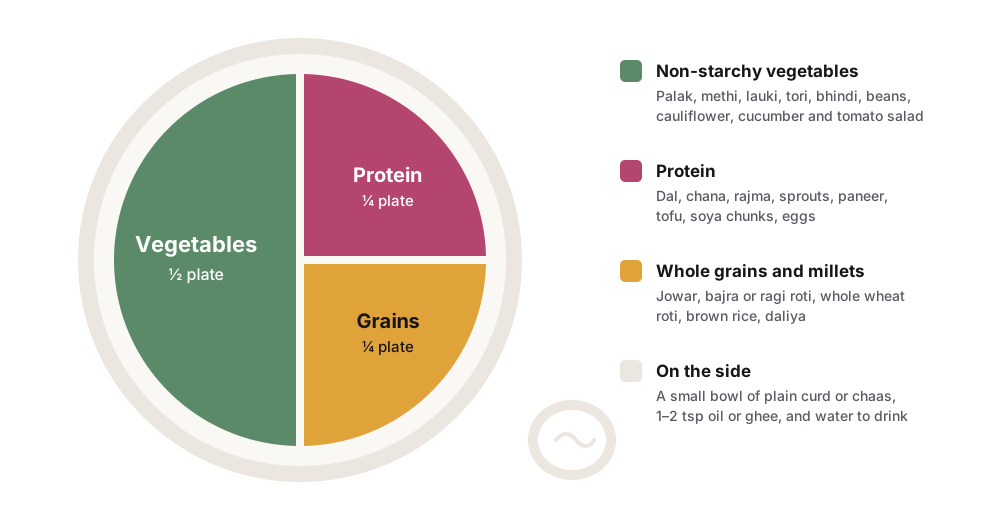
Key tip: Eat your sabzi, salad and dal first, and your roti or rice last. Starting with fibre and protein can help soften the blood sugar rise from the meal.
PCOS/PCOD food chart: foods to eat and limit
| Food group | Eat more often | Limit or have occasionally |
|---|---|---|
| Grains | Jowar, bajra, ragi, oats, daliya (broken wheat), brown or hand-pounded rice, whole wheat atta | Maida, white bread, instant noodles, large portions of white rice |
| Proteins | Moong, masoor, chana, rajma, lobia, sprouts, paneer, tofu, soya, eggs (if you eat them) | Processed and deep-fried snacks made from pulses |
| Vegetables | Leafy greens, lauki, tori, bhindi, broccoli, cauliflower, beans, capsicum, tomatoes, cucumber | Fried vegetables, very large portions of potato |
| Fruits | Guava, apple, pear, orange, papaya, berries, jamun (whole fruit, 1–2 portions a day) | Fruit juices, canned fruit in syrup, large amounts of very ripe mango |
| Dairy | Plain curd, buttermilk (chaas), toned milk, paneer | Sweetened yoghurt, flavoured milk, milkshakes with added sugar |
| Fats and seeds | Almonds, walnuts, flaxseed, pumpkin seeds, groundnuts, measured cold-pressed oil or ghee | Vanaspati, repeatedly reused frying oil, packaged bakery items |
| Drinks | Water, unsweetened tea, jeera or ajwain water, lemon water without sugar | Soft drinks, packaged juices, sweetened coffee drinks |
| Sweets and snacks | Roasted chana, makhana, sprouts chaat, a small piece of dark chocolate | Mithai, biscuits, namkeen, chips, sugary breakfast cereals |
You do not need to avoid foods in the “limit” column forever. The aim is for them to be occasional rather than daily.
Sample 7-day Indian vegetarian PCOS/PCOD meal plan
This plan is a starting point, not a prescription. Portions depend on your age, weight, activity level and goals, so ask a dietitian to personalise it.
| Day | Breakfast | Lunch | Evening snack | Dinner |
|---|---|---|---|---|
| Monday | Vegetable besan chilla with mint chutney | 2 jowar rotis, palak dal, lauki sabzi, salad | Roasted chana (a handful) and green tea | Paneer bhurji, 1 multigrain roti, cucumber raita |
| Tuesday | Vegetable oats upma with peanuts | Brown rice (small bowl), rajma, mixed salad, curd | Guava | Moong dal khichdi with vegetables, buttermilk |
| Wednesday | Moong sprout chaat with lemon | 2 bajra rotis, chana masala, bhindi sabzi | A few almonds and walnuts | Tofu and vegetable stir-fry, 1 whole wheat roti |
| Thursday | Ragi dosa with sambar | Daliya pulao with vegetables, masoor dal, salad | Buttermilk and makhana | Mixed vegetable soup, paneer tikka, salad |
| Friday | Plain curd with flaxseed, apple and a few nuts | 2 whole wheat rotis, lobia curry, cabbage sabzi | Sprouts salad | Vegetable dalia khichdi, cucumber raita |
| Saturday | Vegetable poha with peanuts and a side of curd | Millet (foxtail or kodo) pulao, chole, salad | Orange or papaya | Soya chunk curry, 1 jowar roti, sautéed greens |
| Sunday | Moong dal cheela with paneer filling | Small bowl of rice, sambar, beans poriyal, curd | Roasted makhana | Palak paneer, 1 multigrain roti, salad |
Some tips for using the plan:
- Use about 1–2 teaspoons of oil per dish, not more.
- Fill half the plate with vegetables at lunch and dinner.
- Keep fruit whole, one portion at a time, ideally as a snack rather than straight after a meal.
- Drink water through the day, and avoid adding sugar to tea.
Lifestyle habits that matter as much as food
Exercise regularly
Physical activity improves insulin sensitivity even without weight loss. Aim for at least 150 minutes of moderate activity a week — such as brisk walking, cycling, dancing or swimming — along with strength training two or more days a week. Muscle uses glucose efficiently, so building strength is especially helpful in PCOS.
Prioritise sleep
Poor or short sleep can worsen insulin resistance and increase cravings. Aim for 7–9 hours, with a regular sleep and wake time.
Manage stress
Chronic stress raises cortisol, which can affect blood sugar and appetite. Yoga, breathing exercises, time outdoors and talking to someone you trust can help. PCOS is also linked with a higher risk of anxiety and depression, so do seek support if your mood is low.
Track your patterns
Keeping a record of your periods, symptoms, meals and exercise can show you what helps. The Nitya Health app lets you log your cycle along with daily habits, so you can share a clearer picture with your doctor.
How much does weight loss help?
For people with PCOS who are overweight, losing even 5–10% of body weight can improve insulin resistance, make periods more regular, help ovulation return and improve other symptoms. For someone weighing 80 kg, that is a loss of just 4–8 kg.
It is important to aim for slow, steady change rather than crash diets, which are hard to maintain and can lead to muscle loss. If you have PCOS and are not overweight (“lean PCOS”), the same eating principles still help with insulin and hormone balance — the focus is on food quality rather than weight loss.
Supplements: what to know
You may see many supplements advertised for PCOS, such as inositol, vitamin D, omega-3 or spearmint tea. Some have early research behind them, but the evidence is mixed and they are not a substitute for diet, exercise and medical care. Vitamin D deficiency is common in India, and your doctor may check your levels. Always discuss supplements with your doctor before starting them, especially if you are trying to conceive or taking other medicines.
When to see a doctor
PCOS should be diagnosed and managed by a doctor (you can check your symptoms first with our free PCOS/PMOS symptom checker), usually a gynaecologist or endocrinologist, often with the support of a registered dietitian. See a doctor if you notice:
- Periods that are irregular, come less often than every 35 days, or stop for three months or more (when not pregnant)
- Excess hair on the face, chest or abdomen, persistent acne or scalp hair thinning
- Unexplained weight gain, especially around the waist
- Dark, velvety patches of skin on the neck or underarms, which can be a sign of insulin resistance
- Difficulty getting pregnant
- Very heavy or prolonged bleeding when periods do come
Your doctor may recommend blood tests and an ultrasound, and can discuss treatments such as medicines to regulate periods or improve insulin sensitivity. If your periods are irregular for other reasons, our guide to irregular periods explains common causes.
Frequently asked questions
Is there one best diet for PCOS?
No single diet has been proven best for everyone with PCOS. A balanced pattern built on whole grains, plenty of vegetables, protein at every meal and fewer refined carbs and sugary foods is a good starting point that you can adapt to your own tastes and needs.
Should I stop eating rice and roti completely if I have PCOS?
No. You do not need to cut out grains. Choosing whole or less-polished grains, keeping portions moderate and pairing them with dal, vegetables and protein is usually more helpful and easier to sustain than cutting them out.
Can diet alone cure PCOS?
PCOS is a long-term condition that cannot be cured, but diet and lifestyle changes can improve symptoms such as irregular periods, weight gain and insulin resistance. Some people also need medicines, so it is important to work with a doctor.
Is the PCOD diet different from the PCOS diet?
No. PCOD is the name commonly used in India for PCOS, and PCOS has recently been renamed PMOS. All three describe the same condition, so the same diet advice applies: steady blood sugar, protein and fibre at every meal, and fewer refined carbs and sugary foods.
Is dairy bad for PCOS?
There is no strong evidence that everyone with PCOS needs to avoid dairy. Plain curd, buttermilk, paneer and milk can be useful sources of protein and calcium. If you notice that dairy worsens your acne or digestion, discuss it with your doctor or dietitian.
- #pcos
- #pcod
- #pmos
- #pcos diet
- #pcod diet
- #insulin resistance
- #indian diet plan
- #hormones
Track it with Nitya Health
Log your cycle, symptoms and habits — and get answers from an AI health coach.