Kalonji Seeds: Benefits, Nutrition, Side Effects & Recipes
What kalonji (nigella seeds) can and cannot do for your health, its nutrition, how much to eat, side effects and who should avoid it, plus 3 Indian recipes.
By Nitya Health Editorial Team8 min read
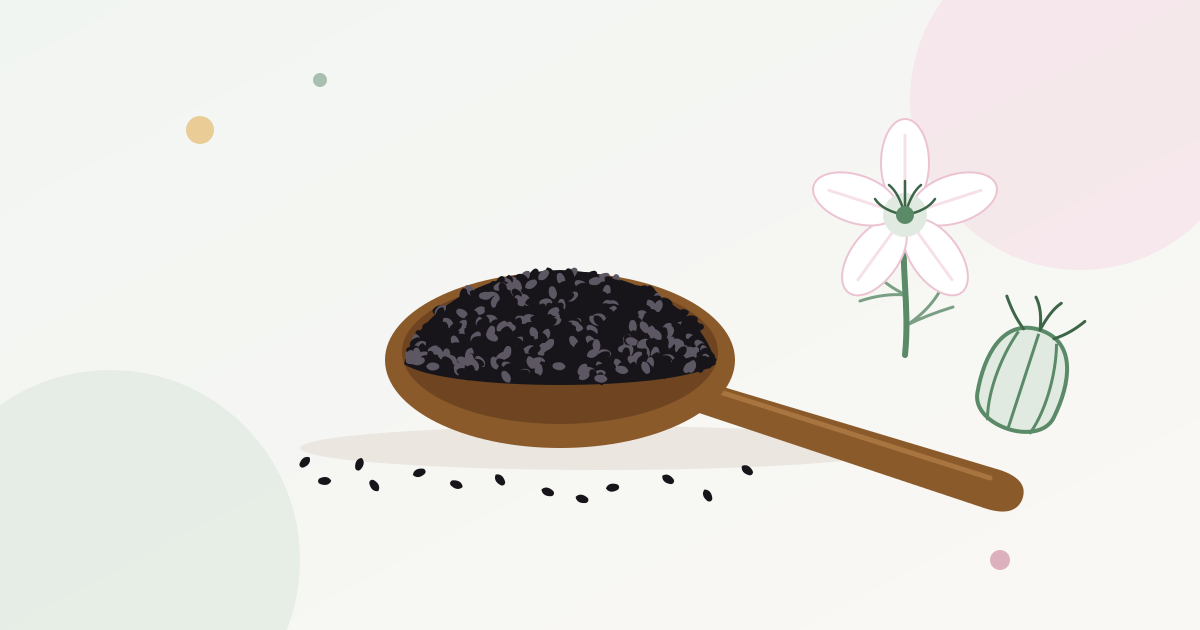
Kalonji — the tiny, jet-black, teardrop-shaped seeds you see sprinkled on naan, mathri and achar — has been part of Indian kitchens and traditional medicine for centuries. Lately, it is also all over social media as a cure for everything from belly fat to hair fall.
So what does the evidence actually say? This guide covers kalonji’s nutrition, the benefits with the strongest research behind them, the side effects, who should be careful, how much to use and three simple Indian recipes.
What is kalonji?
Kalonji are the seeds of Nigella sativa, a small flowering plant. In English they are called nigella seeds or black seed, and in different parts of India you may hear them called kalonji, mangrela or kalo jeere (Bengali).
Two common mix-ups:
- Kalonji is not onion seed, even though shops often label it that way. Real onion seeds come from a completely different plant.
- Kalonji is not shahi jeera (caraway-like black cumin), though both are sometimes called “black cumin”.
Kalonji has a slightly bitter, smoky, oregano-onion flavour. It is one of the five spices in Bengali panch phoron and is widely used in pickles, breads and vegetable tadkas.
Kalonji nutrition
Kalonji seeds are rich in oil, protein and fibre. Published values vary quite a bit by source and growing conditions, so treat these as rough figures.
| Nutrient | Per 100 g (approx.) | Per 1 tsp, about 3 g (approx.) |
|---|---|---|
| Energy | 380–400 kcal | 12 kcal |
| Protein | 17–20 g | 0.5–0.6 g |
| Fat (mostly unsaturated) | 30–38 g | 1 g |
| Carbohydrates | 30–35 g | 1 g |
| Dietary fibre | 8–10 g | 0.3 g |
| Iron | 9–10 mg | 0.3 mg |
| Calcium | 200–500 mg | 6–15 mg |
The second column matters most. Because we eat kalonji in teaspoon amounts, it does not contribute much protein, iron or calcium to your diet. Its potential health effects come from active plant compounds instead — mainly thymoquinone, along with other antioxidants and essential oils.
Think of kalonji as a flavourful spice with some promising research behind it, not as a replacement for medicine, a balanced diet or regular exercise.
Health benefits of kalonji: what the evidence says
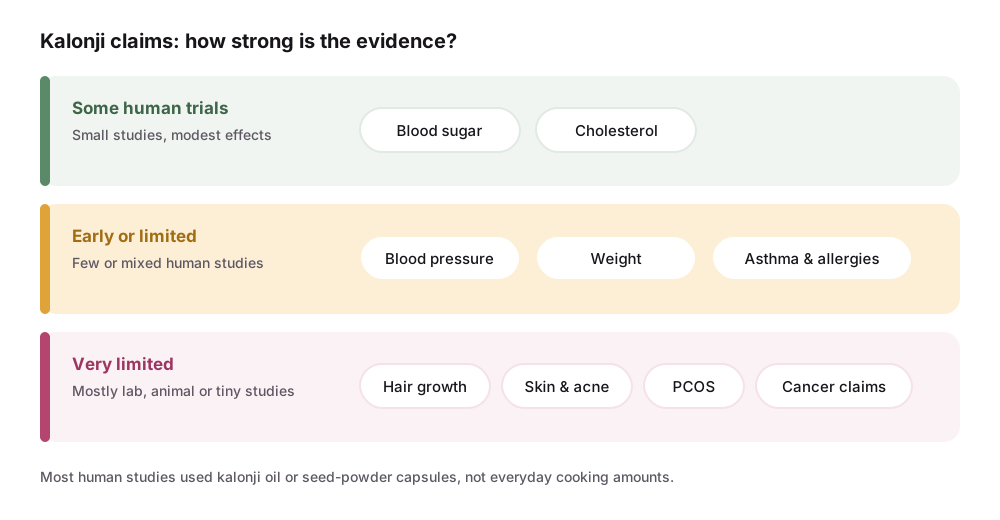
Kalonji is one of the more studied traditional spices. However, much of the research is in test tubes or animals, and the human studies are often small, short and use concentrated oil or powdered seed capsules, not the pinch you add to a sabzi. Here is a realistic summary.
1. Blood sugar
Several small clinical trials in people with type 2 diabetes or prediabetes have found that kalonji seed powder or oil, taken alongside usual treatment, modestly lowered fasting blood sugar and HbA1c. These results are encouraging but not strong enough to replace diabetes medicines — and they mean people on those medicines need to be careful (see side effects below).
2. Cholesterol and heart health
Reviews of human studies suggest kalonji may modestly lower total cholesterol, LDL (“bad”) cholesterol and triglycerides. Effects are generally small and varied between studies.
3. Blood pressure
Some trials report a small drop in blood pressure in people with mildly raised readings. The evidence is limited, and kalonji should never be used to replace prescribed blood-pressure medicines.
4. Weight management
A few studies found slightly greater reductions in weight, BMI or waist size when kalonji supplements were added to a diet plan. The difference was modest — a sprinkle on your food will not melt belly fat on its own.
5. Anti-inflammatory and antioxidant effects
Thymoquinone shows clear anti-inflammatory and antioxidant activity in laboratory studies. Small human studies have looked at conditions such as asthma, allergies and joint pain, with some positive but early results.
6. Hair, skin and PCOS
Kalonji oil is widely promoted for hair fall, acne and PCOS. Research here is very limited, mostly small or early-stage studies, so it is too soon to say it works. If you have PCOS, a balanced eating pattern matters far more — see our PCOS diet chart with Indian foods. Kalonji is also sometimes included in seed cycling routines, though this practice itself has little scientific backing.
How much kalonji should you eat?
| Form | Typical amount | Notes |
|---|---|---|
| Whole seeds in cooking | ½–1 tsp a day | Safe for most healthy adults |
| Kalonji water | ½ tsp seeds in a glass of water | Fine occasionally; do not overdo it |
| Kalonji oil (by mouth) | Only on medical advice | Concentrated; more likely to interact with medicines |
| Capsules / supplements | Only on medical advice | Studies often used around 1–3 g a day for a few weeks |
More is not better. Use kalonji as a spice, and talk to your doctor before taking oil or supplements regularly.
Side effects and who should avoid kalonji
In normal food amounts, kalonji is generally well tolerated. Problems are more likely with large amounts, oil or supplements.
Possible side effects
- Stomach upset — nausea, bloating, acidity or constipation, especially on an empty stomach
- Skin reactions — applying kalonji oil directly to the skin can cause allergic contact dermatitis (itchy, red, blistering rash) in some people. Always do a patch test and dilute it.
- Very low blood sugar or blood pressure if combined with medicines that already lower them
- Kidney or liver concerns — rare reports have linked very high doses of supplements to kidney problems, so avoid high doses if you have kidney or liver disease
Who should be careful
- Pregnant women: kalonji as a spice in food is generally considered fine, but avoid large or medicinal amounts, daily kalonji water and oil or capsules. Traditionally, high doses were thought to stimulate the uterus, and safety data in pregnancy is lacking.
- Breastfeeding mothers: stick to food amounts, as supplement safety is not well studied.
- People on diabetes medicines (including insulin): kalonji may add to their blood-sugar-lowering effect. Monitor your sugar levels and inform your doctor.
- People on blood-pressure medicines: kalonji may lower blood pressure further, causing dizziness.
- People on blood thinners (such as warfarin or aspirin) or with bleeding disorders: kalonji may slow blood clotting in theory, increasing bleeding risk.
- Before surgery: stop kalonji supplements or oil at least two weeks before any planned surgery or dental procedure, and tell your surgeon.
- Children: use only food amounts.
How to use kalonji in Indian cooking
Kalonji releases its flavour best when briefly heated. Add it to hot oil or ghee for a few seconds until it crackles — any longer and it can turn bitter. You can also dry-roast it lightly and crush it.
Easy ways to use it:
- Sprinkle on naan, kulcha, parathas or mathri before cooking
- Add to the tadka for aloo, kaddu (pumpkin) or baingan sabzi
- Use in mango, lemon or mixed vegetable achar
- Add a pinch to dal, raita or chutney
- Mix with other seeds (flax, sesame, sunflower) as a mukhwas
3 easy kalonji recipes
1. Kalonji water
Ingredients:
- ½ tsp kalonji seeds
- 1 glass (250 ml) water
- A squeeze of lemon (optional)
Method:
- Lightly crush the seeds and soak them in warm water overnight, or simmer them in water for 3–4 minutes.
- Strain, add lemon if you like, and sip warm.
- Have it occasionally, not every day for months. If it causes acidity, drink it after a meal instead of on an empty stomach.
2. Kalonji aloo (Bengali-style potato sabzi)
Ingredients (serves 2–3):
- 3 medium potatoes, cubed
- 1 tsp kalonji
- 1–2 green chillies, slit
- ¼ tsp turmeric, salt to taste
- 1 tbsp mustard oil
- Coriander leaves
Method:
- Heat mustard oil until it just begins to smoke, then lower the heat.
- Add kalonji and green chillies; let them crackle for 10 seconds.
- Add potatoes, turmeric and salt. Stir well.
- Cover and cook on low heat, stirring occasionally, until the potatoes are soft and lightly crisp (12–15 minutes).
- Finish with coriander. Serve with roti or dal-chawal. Add a handful of peas for extra fibre and protein.
3. Kalonji–ajwain paratha
Ingredients (makes 6):
- 2 cups whole-wheat atta
- 1 tsp kalonji and ½ tsp ajwain (carom seeds)
- Salt to taste
- Water to knead; a little ghee or oil for cooking
Method:
- Mix atta, kalonji, ajwain and salt. Knead into a soft dough with water and rest for 15 minutes.
- Roll into parathas, folding with a little ghee for layers if you like.
- Cook on a hot tawa until golden spots appear on both sides.
- Serve with curd and pickle. For a more filling meal, add grated paneer or mashed moong dal to the dough — see our high-protein vegetarian diet plan for more ideas.
Buying and storing kalonji
- Look for seeds that are uniformly black, dry and aromatic, with no dust or musty smell.
- Store in an airtight glass jar away from heat and sunlight. Whole seeds keep their flavour for several months.
- Buy kalonji oil only from trusted brands, and check whether it is meant for cooking, eating or external use only.
When to see a doctor
Kalonji is safe as a spice for most people, but stop using it and speak to a doctor if you notice:
- A skin rash, swelling or itching after using kalonji oil
- Dizziness, shakiness or sweating that could suggest low blood sugar or low blood pressure
- Ongoing stomach pain, vomiting or changes in urine
If you have diabetes, high blood pressure, a bleeding disorder, kidney or liver disease, or are pregnant, check with your doctor before taking kalonji in any form other than ordinary cooking amounts.
Frequently asked questions
Are kalonji and onion seeds the same?
No. Kalonji is often sold as "onion seeds", but it comes from the Nigella sativa plant, which is not related to onions. It is also different from shahi jeera, although both are sometimes called black cumin.
How much kalonji can I eat in a day?
Using about ½ to 1 teaspoon of kalonji seeds a day in food is considered safe for most healthy adults. Higher amounts or concentrated oil and capsules should only be taken with a doctor's advice.
Can I take kalonji during pregnancy?
Small amounts used as a spice in cooking are generally considered fine. Avoid large amounts, kalonji water every day, oil or supplements during pregnancy and breastfeeding unless your doctor says otherwise.
Does kalonji help with weight loss or hair growth?
Some small studies suggest kalonji supplements may slightly reduce weight and waist size alongside diet changes, but the effect is modest. Evidence for hair growth is limited and mostly comes from small or early studies.
- #kalonji
- #nigella seeds
- #spices
- #healthy recipes
- #nutrition
Track it with Nitya Health
Log your cycle, symptoms and habits — and get answers from an AI health coach.