What Are the Phases of the Menstrual Cycle?
A clear guide to the four phases of the menstrual cycle — menstrual, follicular, ovulation and luteal — what your hormones do in each, and how you may feel.
By Nitya Health Editorial Team4 min read
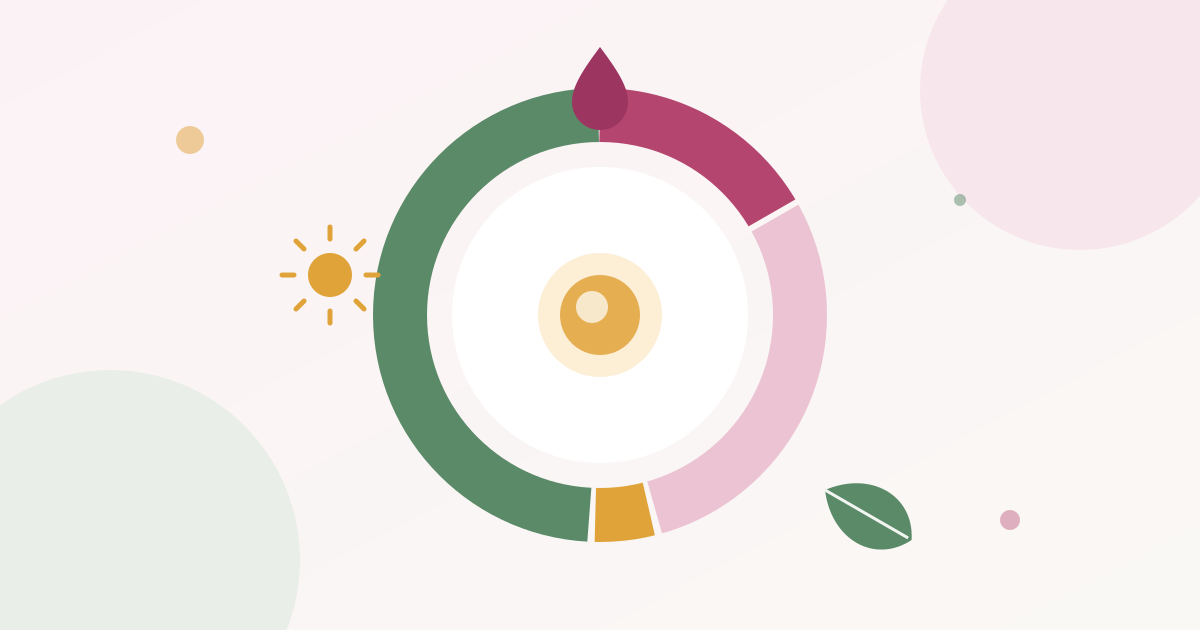
Your menstrual cycle is much more than your period. It is a monthly hormonal rhythm that prepares your body for a possible pregnancy — and it influences your energy, mood, appetite, sleep and skin along the way.
The cycle is counted from the first day of your period to the day before your next period begins. A typical cycle is around 28 days, but anything from 21 to 35 days is common in adults. It is usually described in four phases.
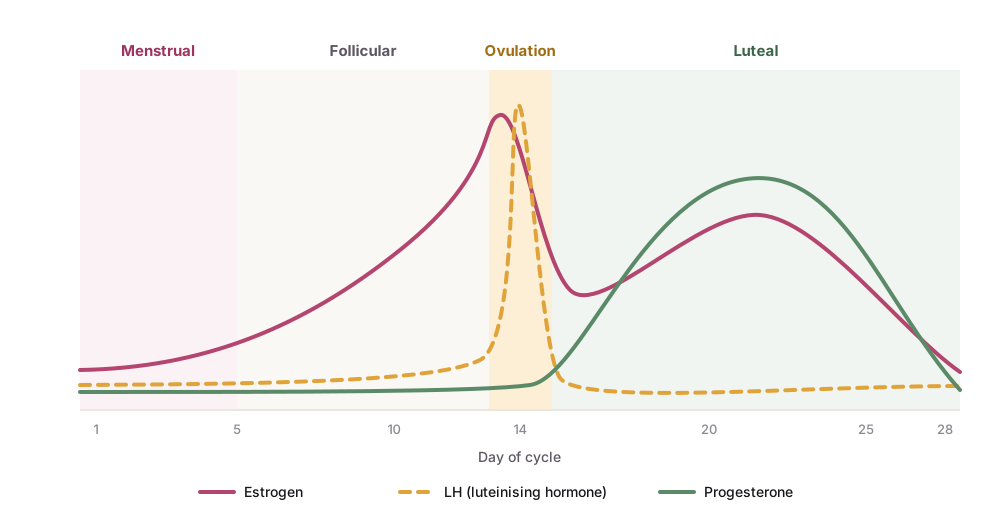
| Phase | Typical days (28-day cycle) | Main hormonal event |
|---|---|---|
| Menstrual | Days 1–5 | Estrogen and progesterone are low; the uterine lining sheds |
| Follicular | Days 1–13 | FSH stimulates follicles; estrogen rises |
| Ovulation | Around day 14 | LH surge releases an egg |
| Luteal | Days 15–28 | Progesterone rises, then falls if there is no pregnancy |
The follicular phase technically begins on day 1 of your period, so the menstrual and follicular phases overlap. Your timings will shift if your cycle is shorter or longer than 28 days — usually it is the follicular phase that changes length.
1. The menstrual phase (days 1–5)
The cycle starts on the first day of full bleeding. Because no pregnancy occurred in the previous cycle, levels of estrogen and progesterone drop. This signals the thickened lining of the uterus (the endometrium) to shed, and it leaves the body as menstrual blood through the vagina.
A period typically lasts 3 to 7 days, with a total blood loss of about 30–80 ml.
What you may notice
- Cramps in the lower abdomen or back, caused by prostaglandins that make the uterus contract
- Low energy or fatigue
- Bloating, headaches or loose stools
- Tender breasts that ease as bleeding begins
How to support your body
- Iron-rich foods such as spinach, rajma, chana, jaggery and dates help replace iron lost through bleeding — pair them with vitamin C (amla, lemon, guava) to improve absorption.
- Gentle movement like walking, stretching or yoga can ease cramps.
- Heat — a hot water bag on the lower belly — relaxes the uterine muscles.
2. The follicular phase (days 1–13)
The follicular phase overlaps with your period and continues until ovulation. The brain releases follicle-stimulating hormone (FSH), which prompts several follicles in the ovaries to grow. Each follicle holds an immature egg. Usually one becomes dominant and keeps maturing while the others stop growing.
The growing follicle produces estrogen, which rebuilds and thickens the uterine lining.
What you may notice
- Rising energy, motivation and a brighter mood as estrogen climbs
- Clearer skin for many people
- Thin, sticky discharge that becomes creamier and wetter as ovulation approaches
This is often a good time for harder workouts, learning something new or planning ahead.
3. The ovulation phase (around day 14)
When estrogen peaks, the brain releases a sharp surge of luteinising hormone (LH). About 24–36 hours later, the dominant follicle releases a mature egg — this is ovulation. The egg travels down the fallopian tube and survives for roughly 12–24 hours.
Because sperm can live for up to five days, your fertile window is about six days: the five days before ovulation and the day of ovulation itself.
Signs of ovulation
- Clear, slippery, stretchy discharge, similar to raw egg white
- A slight rise in basal body temperature (about 0.2–0.5°C) after ovulation
- One-sided pelvic twinges, called mittelschmerz
- Increased libido
- A positive result on an LH ovulation test strip
4. The luteal phase (days 15–28)
After releasing the egg, the empty follicle turns into the corpus luteum, a temporary gland that produces progesterone (and some estrogen). Progesterone keeps the uterine lining thick and ready for a fertilised egg to implant.
- If pregnancy occurs, the embryo produces hCG, which keeps the corpus luteum working.
- If pregnancy does not occur, the corpus luteum breaks down after about 10–14 days. Progesterone and estrogen fall, and your next period begins.
What you may notice
In the second half of the luteal phase, falling hormones can bring premenstrual symptoms (PMS):
- Bloating and water retention
- Breast tenderness
- Mood swings, irritability or low mood
- Food cravings, especially for sweet or salty foods
- Acne flare-ups and poorer sleep
Regular exercise, cutting back on salt and caffeine, eating complex carbohydrates and getting enough sleep can all ease PMS.
How to track your cycle phases
Knowing which phase you are in helps you anticipate symptoms, plan workouts and understand your fertility. You can track:
- Period start and end dates — the foundation of every cycle prediction
- Cervical mucus — changes clearly through the cycle
- Basal body temperature — confirms ovulation after the fact
- Symptoms and mood — reveal your personal patterns over a few months
An app like Nitya Health lets you log all of these in one place and predicts your next period and fertile window from your own history.
When to see a doctor
Talk to a gynaecologist if you notice:
- Cycles consistently shorter than 21 days or longer than 35 days
- No period for three months or more (and you are not pregnant)
- Bleeding that soaks a pad or tampon every hour, or lasts more than 7 days
- Bleeding between periods or after sex
- Period pain severe enough to stop your daily activities
- PMS that seriously affects your relationships or work — this may be PMDD
Irregular or painful cycles can be linked to conditions such as PCOS, thyroid disorders, endometriosis or fibroids, all of which are treatable once diagnosed.
Frequently asked questions
How long is a normal menstrual cycle?
For adults, a cycle anywhere from 21 to 35 days long is generally considered normal. Teenagers can have cycles between 21 and 45 days as their hormones settle. What matters most is your own usual pattern.
Which phase of the cycle is the longest?
The follicular phase usually varies the most and is often the longest, because it includes your period and lasts until ovulation. The luteal phase is more consistent, typically 12 to 14 days.
Can I get pregnant during my period?
It is unlikely but possible, especially with short cycles. Sperm can survive up to five days, so sex near the end of a period can lead to pregnancy if you ovulate early.
Why do I feel different in each phase?
Estrogen and progesterone rise and fall across the cycle and affect energy, mood, sleep, appetite and skin. Many people feel most energetic around ovulation and more tired or irritable in the late luteal phase.
- #menstrual cycle
- #hormones
- #ovulation
- #PMS
- #period tracking
Track it with Nitya Health
Log your cycle, symptoms and habits — and get answers from an AI health coach.