Protein-Rich Foods: Vegetarian Diet Plan & Indian Recipes
The best protein-rich vegetarian Indian foods, how much protein women need, a 1-day veg diet plan with about 60 g protein, and three easy high-protein recipes.
By Nitya Health Editorial Team8 min read
Protein is the nutrient most Indian vegetarian diets quietly fall short on. A typical day of chai and biscuits, a plate of rice or roti with a thin dal, and a light dinner can leave many women with far less protein than their body needs — even when calories are more than enough.
The good news: Indian kitchens are full of excellent vegetarian protein sources. Dals, chana, rajma, paneer, curd, soya, peanuts and seeds can easily add up to 50–65 g of protein a day with a little planning. This guide covers how much you need, the best foods, a sample day plan and three simple recipes.
Why protein matters for women
Protein is not just for gym-goers. Your body uses it every day to:
- Build and repair muscle, which protects your metabolism and bone health as you age
- Make haemoglobin, enzymes and hormones, including those involved in your menstrual cycle
- Keep hair, skin and nails healthy — hair fall is a common sign of low protein intake
- Support immunity, since antibodies are made from protein
- Keep you full for longer, which helps steady blood sugar and reduce cravings
Protein needs rise during pregnancy and breastfeeding, after illness or surgery, and if you do regular strength training. Women with PCOS may also find that a protein-rich breakfast helps with energy and cravings — see our PCOS diet chart with Indian foods for more.
How much protein do you need?
Indian dietary guidelines (ICMR-NIN) suggest about 0.8 g of protein per kg of body weight for healthy adults. For most Indian women that is roughly:
| Body weight | Approx. daily protein |
|---|---|
| 50 kg | 40 g |
| 55 kg | 44–45 g |
| 60 kg | 48 g |
| 70 kg | 56 g |
This is a minimum to prevent deficiency, not an upper limit. Many nutritionists suggest aiming a little higher — around 1–1.2 g per kg — if you are active, trying to build strength or managing your weight. Pregnant and breastfeeding women need extra protein, so ask your doctor or dietitian for a personal target.
Spread your protein across the day. Aim for roughly 15–20 g at each main meal instead of trying to get most of it at dinner. Your body uses it better, and you stay fuller between meals.
Best protein-rich vegetarian Indian foods
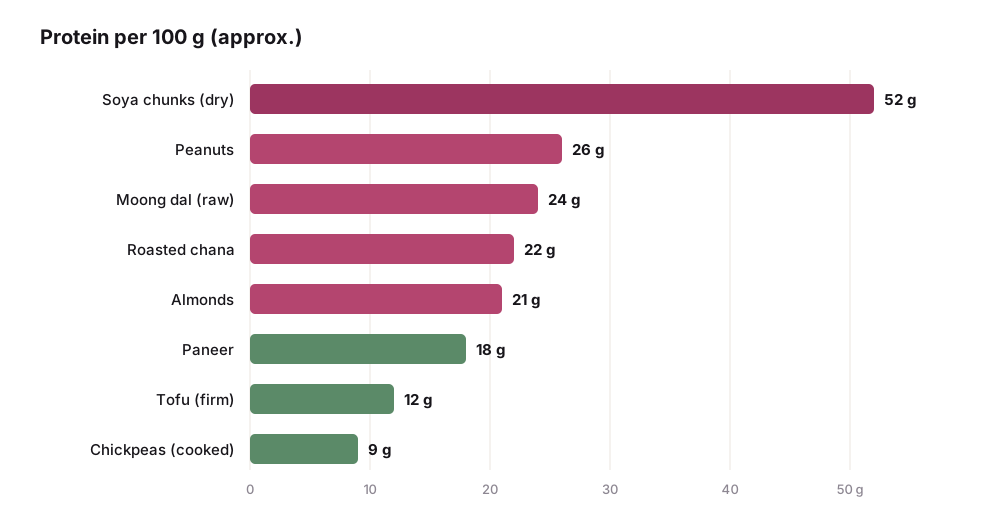
Here are common vegetarian foods ranked by protein. Values are approximate and vary by brand, variety and cooking method.
| Food | Protein per 100 g (approx.) | Typical serving | Protein per serving (approx.) |
|---|---|---|---|
| Soya chunks (dry) | 52 g | 30 g dry | 15–16 g |
| Pumpkin seeds | 30 g | 1 tbsp (10 g) | 3 g |
| Peanuts (moongphali) | 26 g | Small handful (30 g) | 7–8 g |
| Moong dal (raw) | 24 g | 30 g raw (1 katori cooked) | 7 g |
| Besan (gram flour) | 22 g | 40 g (2 chillas) | 9 g |
| Roasted chana | 22 g | Small handful (30 g) | 6–7 g |
| Almonds (badam) | 21 g | 10 almonds (12 g) | 2.5 g |
| Paneer | 18 g | 50 g | 9 g |
| Tofu (firm) | 12 g | 100 g | 12 g |
| Chickpeas (kabuli chana), cooked | 9 g | 1 katori (150 g) | 13 g |
| Kidney beans (rajma), cooked | 8.5 g | 1 katori (150 g) | 12–13 g |
| Hung curd / Greek yoghurt | 9 g | 100 g | 9 g |
| Curd (dahi) | 3.5 g | 1 katori (150 g) | 5 g |
| Milk (cow or toned) | 3.3 g | 1 glass (200 ml) | 6.5 g |
Dals and legumes
Moong, masoor, toor, urad, chana dal, rajma, lobia and kabuli chana are the backbone of vegetarian protein. Cooked dal is mostly water, so a watery katori may only give 5–7 g. Make dals thicker, eat a full katori, and try sprouts, chillas and sundal to get more.
Dairy
Paneer, curd, hung curd, milk and buttermilk (chaas) all provide good-quality protein along with calcium. Hung curd is an easy upgrade — straining curd roughly doubles its protein per spoonful.
Soya and tofu
Soya chunks are among the most concentrated plant proteins available and are inexpensive. Read our guide on soya chunks nutrition and recipes for how to cook them well.
Nuts, seeds and millets
Peanuts, almonds, pumpkin seeds, sunflower seeds, flaxseeds and sesame (til) add protein and healthy fats. Millets like bajra, jowar and ragi and grains like whole wheat also contribute a few grams per serving — it adds up over the day.
Sample 1-day Indian vegetarian diet plan (about 60–65 g protein)
This plan is for a healthy adult woman and gives a rough idea of how protein adds up. Adjust portions to your hunger, activity level and any medical advice you have received.
| Meal | What to eat | Protein (approx.) |
|---|---|---|
| Breakfast | 2 moong dal chillas with mint chutney + 1 glass milk (200 ml) | 18 g |
| Mid-morning | Small handful roasted chana (25–30 g) + 1 fruit | 5–6 g |
| Lunch | 2 rotis + 1 katori rajma + 1 katori curd + salad | 19 g |
| Evening | Small handful of peanuts (20 g) with tea or lemon water | 5 g |
| Dinner | Paneer bhurji (75 g paneer) + 1 roti + a vegetable sabzi | 19 g |
| Total | About 65 g |
Easy swaps
- Replace rajma with chole, lobia or a thick dal
- Swap paneer bhurji for tofu bhurji or a soya chunks curry
- Use sattu (roasted chana flour) in a sharbat or paratha for a quick protein boost
- Add a spoonful of seeds to poha, upma or salads
3 high-protein vegetarian Indian recipes
1. Moong dal chilla (about 12 g protein per 2 chillas)
Ingredients (makes 4 chillas):
- 100 g yellow moong dal, soaked for 3–4 hours
- 1 small onion and 1 tomato, finely chopped
- 1 green chilli and a small piece of ginger
- A handful of chopped coriander or grated vegetables (carrot, spinach)
- Salt, a pinch of turmeric, ½ tsp cumin (jeera)
- 1–2 tsp oil for cooking
Method:
- Drain the dal and grind it with the chilli, ginger and a little water into a smooth, pourable batter.
- Stir in salt, turmeric, jeera, onion, tomato and coriander.
- Heat a tawa, lightly grease it and pour a ladle of batter. Spread it into a thin circle.
- Cook on medium heat until the edges lift, flip and cook the other side until golden.
- Serve hot with mint chutney or curd. Add crumbled paneer as a filling for extra protein.
2. Paneer bhurji (about 14 g protein per serving)
Ingredients (serves 2):
- 150 g paneer, crumbled
- 1 onion, 1 tomato and 1 green chilli, finely chopped
- ½ tsp ginger-garlic paste
- ¼ tsp turmeric, ½ tsp red chilli powder, ½ tsp garam masala
- 1 tsp oil or ghee, salt and coriander to finish
Method:
- Heat oil, add onion and sauté until soft and light golden.
- Add ginger-garlic paste and green chilli; cook for a minute.
- Add tomato and the spices; cook until the tomato turns soft and mushy.
- Add the crumbled paneer and salt. Mix gently and cook for 2–3 minutes — overcooking makes paneer rubbery.
- Finish with coriander and a squeeze of lemon. Eat with roti or stuffed into a whole-wheat wrap.
3. Chana salad (about 15 g protein per bowl)
Ingredients (serves 1):
- 1 katori boiled kabuli chana or kala chana (about 150 g cooked)
- ½ cucumber, 1 small tomato and ½ onion, chopped
- 1 tbsp roasted peanuts
- Juice of ½ lemon, chaat masala, roasted cumin powder, salt
- Coriander and mint leaves
Method:
- Add the chana and chopped vegetables to a bowl.
- Season with lemon juice, chaat masala, cumin and salt.
- Top with peanuts and herbs and mix well.
- For a creamier version, stir in 2 tbsp hung curd.
The lemon juice does double duty — vitamin C helps your body absorb the iron in chana. Read more in our guide to iron-rich vegetarian foods.
Tips to get more protein every day
- Start with breakfast. Swap plain poha or toast for chillas, besan cheela, paneer paratha, sprouts or a curd bowl.
- Thicken your dal. Use more dal and less water, or add a spoonful of sprouts.
- Keep protein snacks at hand. Roasted chana, makhana, peanuts and a small bowl of curd beat biscuits.
- Add a dairy serving — chaas with lunch or a glass of milk — if you tolerate dairy.
- Track for a few days. Logging meals for a week in an app like Nitya Health can show you whether you are really reaching your target, and how your energy changes when you do.
Who should be careful
Most healthy women can safely eat more protein from whole foods. Talk to a doctor or registered dietitian before making big changes if you:
- Have kidney disease or reduced kidney function
- Are pregnant or breastfeeding and want a personalised plan
- Have gout, as some pulses may need to be moderated
- Have a known soy, peanut or milk allergy
- Plan to use protein powders or supplements regularly
If you feel constantly tired, notice heavy hair fall, brittle nails or swelling in your feet despite eating well, see a doctor — these can have causes beyond diet that are worth checking.
Frequently asked questions
How much protein does a woman need every day?
Indian guidelines suggest about 0.8 g of protein per kg of body weight for healthy adults, which works out to roughly 45–50 g a day for a 55–60 kg woman. Needs go up during pregnancy, breastfeeding and with regular strength training.
Can vegetarians get enough protein without eggs or meat?
Yes. Combining dals, legumes, dairy, soya, nuts and seeds across the day easily provides 50–65 g of protein. The key is to include a protein source at every meal rather than relying on one big serving.
Which Indian vegetarian food has the most protein?
Dry soya chunks are the richest, with about 52 g of protein per 100 g. Peanuts, pumpkin seeds, dals, besan, roasted chana and paneer are also excellent everyday sources.
Is it necessary to combine dal and rice for complete protein?
Dal and rice (or roti) together provide a better balance of amino acids than either alone. They do not have to be eaten in the same meal, though — eating a variety of plant proteins over the day works too.
- #protein
- #vegetarian diet
- #indian diet plan
- #healthy recipes
- #nutrition
Track it with Nitya Health
Log your cycle, symptoms and habits — and get answers from an AI health coach.