PCOS vs PCOD vs PMOS: What Is the Difference? (2026 Guide)
PCOS, PCOD and PMOS explained: why PCOS is now called PMOS, whether PCOD is different, plus symptoms, diagnosis, treatment and diet tips for Indian women.
By Nitya Health Editorial Team8 min read
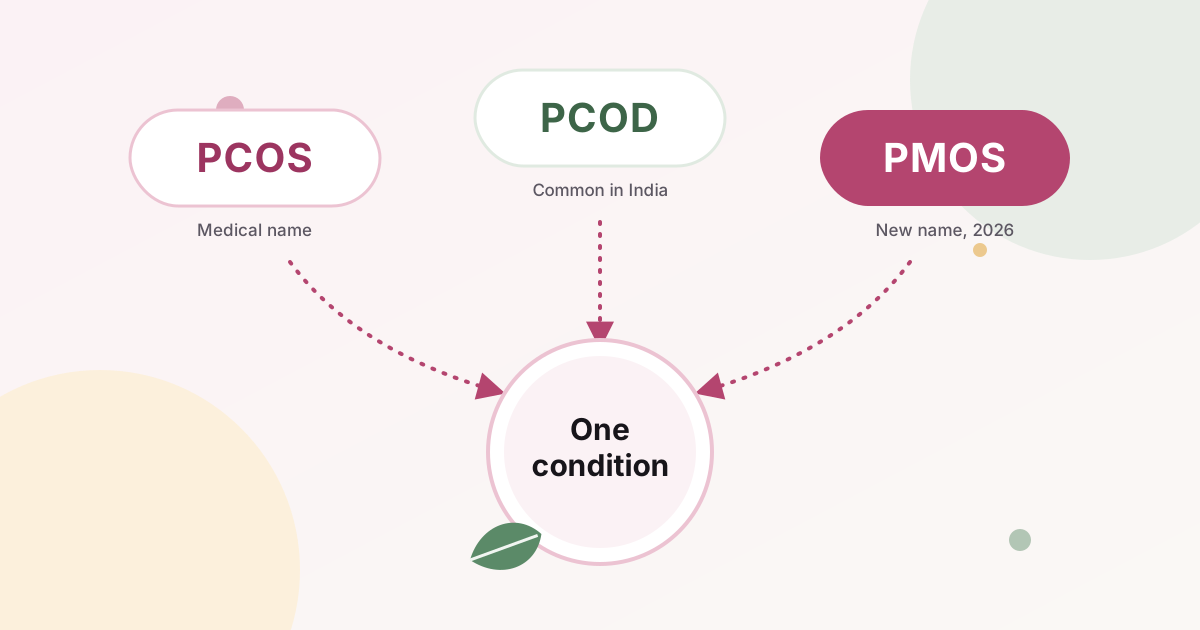
If you have searched for answers about irregular periods, acne or unexplained weight gain, you have probably seen three names: PCOS, PCOD and, more recently, PMOS. Websites often describe them as different conditions, which can be confusing and worrying.
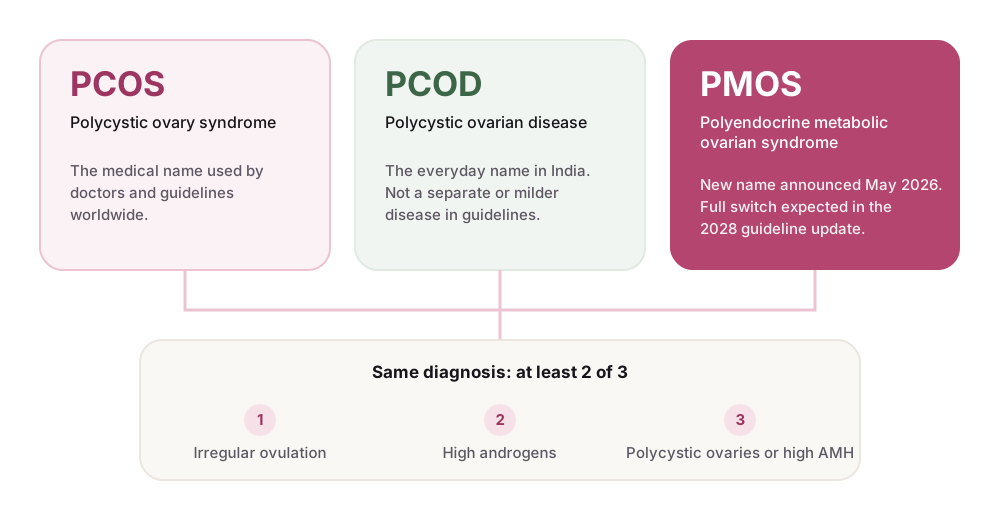
The short answer: they all describe the same hormonal and metabolic condition. PCOS is the long-standing medical name, PCOD is the term widely used in India, and PMOS is the new official name announced in 2026. This guide explains where each name comes from, what the condition actually is, how it is diagnosed and what helps.
Quick answer: PCOS vs PCOD vs PMOS
| PCOS | PCOD | PMOS | |
|---|---|---|---|
| Full form | Polycystic ovary syndrome | Polycystic ovarian disease | Polyendocrine metabolic ovarian syndrome |
| Who uses it | Doctors and guidelines worldwide (until 2026) | Mainly used in India, by patients and some clinics | The new official name from 2026 onwards |
| Separate disease? | No, same condition | No, same condition | No, same condition |
| Diagnosis | Two of three: irregular ovulation, high androgens, polycystic ovaries | Same | Same, criteria unchanged |
| Treatment | Lifestyle changes, plus medicines when needed | Same | Same |
What is PCOS (polycystic ovary syndrome)?
PCOS is one of the most common hormonal conditions in women of reproductive age. Global estimates suggest it affects roughly 1 in 10 women, and Indian studies report figures ranging from about 1 in 10 to 1 in 5, depending on how it is measured. Many people go years without a diagnosis.
It is a syndrome, meaning a group of features that tend to occur together rather than one single cause. The three core features are:
- Irregular or absent ovulation, which shows up as irregular, infrequent or missing periods
- High androgens (male-type hormones such as testosterone), shown by acne, excess facial or body hair, scalp hair thinning, or blood tests
- Polycystic ovaries on ultrasound, meaning many small follicles on the ovaries
Despite the name, the “cysts” are not true cysts. They are immature follicles, egg sacs that started developing but did not mature and release an egg. They are not harmful in themselves and do not need to be removed.
Underneath these features, insulin resistance plays a big part for most people with PCOS, including those who are not overweight. High insulin pushes the ovaries to make more androgens, which in turn disrupts ovulation. This is why diet and exercise matter so much.
What is PCOD (polycystic ovarian disease)?
PCOD is an older term that remains very common in India. You will hear it from friends and family, see it on clinic websites, and often find it in search results alongside PCOS.
Many Indian websites say that PCOD is a milder condition in which “the ovaries release immature eggs”, while PCOS is a more serious “metabolic disorder”. This distinction is not used in international medical guidelines. There is no separate set of criteria for diagnosing PCOD, and the advice on managing it is the same as for PCOS.
If a doctor has told you that you have PCOD, it is reasonable to understand it as PCOS. Asking which features you have (irregular cycles, high androgens, polycystic ovaries, insulin resistance) is more useful than focusing on the label.
What is PMOS, and why was PCOS renamed?
In May 2026, an international consensus published in The Lancet announced that PCOS would be renamed polyendocrine metabolic ovarian syndrome (PMOS). The process was led by Professor Helena Teede at Monash University and involved patients, doctors and researchers from around the world.
The new name breaks down like this:
- Polyendocrine: the condition affects several hormone systems, including insulin, androgens and reproductive hormones
- Metabolic: it is closely linked with insulin resistance, weight, type 2 diabetes and heart health
- Ovarian: it affects ovulation and periods
- Syndrome: it is a group of features, not one disease with one cause
The main reasons for the change were that the old name focused on cysts, which many people do not have, and that it hid the hormonal and metabolic side of the condition. Experts hope the new name will lead to earlier diagnosis and better long-term care, such as regular checks for blood sugar and cholesterol.
What has not changed:
- The diagnostic criteria are the same
- The treatments are the same
- Research and advice about PCOS still applies to PMOS
The change is being phased in over about three years, with the new name expected to be fully adopted in the 2028 international guideline update. For now, you will see PCOS, PCOD and PMOS used side by side.
Symptoms of PCOS, PCOD and PMOS
Symptoms vary a lot between people. Some have only one or two, while others have many. Common signs include:
- Irregular periods: cycles longer than 35 days, fewer than eight periods a year, or periods that stop for months. Our guide to causes of irregular periods explains what counts as irregular.
- Acne, especially deep breakouts along the jawline, chin and neck
- Excess hair growth (hirsutism) on the face, chest, belly or back
- Thinning hair on the scalp
- Weight gain, especially around the waist, or finding it hard to lose weight
- Dark, velvety skin patches (acanthosis nigricans) on the neck, armpits or groin, a sign of high insulin
- Difficulty getting pregnant, because ovulation is irregular
- Tiredness, sugar cravings and low mood
Not sure where you stand? Our free PCOS/PMOS symptom checker takes about 60 seconds and shows which pattern your symptoms point towards. It is not a diagnosis, but it can help you prepare for a doctor’s visit.
How is it diagnosed?
Most doctors use the Rotterdam criteria, updated in the 2023 international guideline. You need at least two of these three, after other causes such as thyroid problems, high prolactin and pregnancy have been ruled out:
- Irregular or absent ovulation
- Clinical or biochemical signs of high androgens: symptoms such as acne and hirsutism, or raised testosterone on a blood test
- Polycystic ovaries on ultrasound, or a raised AMH (anti-Müllerian hormone) blood test in adults
A few points that often cause confusion:
- An ultrasound alone cannot diagnose PCOS. Many people without the condition have polycystic-looking ovaries.
- If you have irregular periods and signs of high androgens, you do not need an ultrasound to be diagnosed.
- In teenagers, ultrasound is not recommended for diagnosis, because polycystic-looking ovaries are normal in the first years after periods start.
Your doctor may also suggest tests for thyroid function (TSH), prolactin, fasting blood sugar or HbA1c, insulin and cholesterol. If you have your fasting glucose and insulin results, you can use our HOMA-IR calculator to estimate insulin resistance.
Types of PCOS
You may read about “types” of PCOS, such as insulin-resistant, inflammatory, adrenal or post-pill PCOS. These are not official medical categories, and many people fit more than one. Still, two patterns are useful to know:
- Insulin-resistant (metabolic) PCOS is the most common pattern. Clues include belly weight, energy crashes after meals, sugar cravings and dark skin patches. It can happen at any weight and is especially common in South Asian women.
- Lean PCOS describes people with a normal weight who still have PCOS. Insulin resistance can be present here too, so the same eating and exercise principles help, with the focus on food quality rather than weight loss.
Treatment and management
There is no permanent cure for PCOS, PCOD or PMOS, but it can be managed very well. Treatment depends on your symptoms and goals, for example regular periods, clearer skin or pregnancy.
Lifestyle changes come first
- Eat for steady blood sugar: protein and fibre at every meal, whole grains and millets instead of refined ones, and fewer sugary drinks and snacks. Our PCOS diet chart with Indian foods includes a 7-day vegetarian meal plan.
- Move regularly: aim for 150 minutes of moderate activity a week plus strength training twice a week. A 10 to 15 minute walk after meals also helps.
- Lose a little weight if you are overweight: losing just 5 to 10% of body weight can make periods more regular and improve insulin resistance.
- Prioritise sleep and stress management: poor sleep and chronic stress both worsen insulin resistance. Our guide to the circadian rhythm has tips on sleeping better.
Medicines your doctor may suggest
- Combined oral contraceptive pills to regulate periods and reduce acne and unwanted hair
- Metformin to improve insulin resistance, often alongside lifestyle changes
- Anti-androgen medicines for hirsutism and acne, used with reliable contraception
- Letrozole, the first-choice medicine to help you ovulate if you are trying to conceive
Supplements such as inositol and vitamin D are popular. Some have early evidence, but results are mixed. Always discuss supplements with your doctor before starting them, especially if you are trying to get pregnant.
Long-term health risks
Part of the reason for the new name is that this condition affects health well beyond periods and fertility. Over time, people with PCOS have a higher risk of:
- Type 2 diabetes and gestational diabetes
- High cholesterol and high blood pressure
- Thickening of the womb lining (endometrial hyperplasia) if periods are very infrequent for a long time
- Sleep apnoea
- Anxiety and depression
The good news is that regular check-ups and healthy habits lower these risks a lot. Ask your doctor how often you should have your blood sugar, blood pressure and cholesterol checked.
When to see a doctor
See a gynaecologist or endocrinologist if you notice:
- Periods that come less often than every 35 days, or stop for three months or more when you are not pregnant
- Persistent acne, unwanted facial or body hair, or scalp hair thinning
- Unexplained weight gain or dark skin patches on the neck or underarms
- Difficulty getting pregnant after 12 months of trying (6 months if you are over 35)
- Very heavy or long periods when they do come
Keeping a record of your cycles and symptoms makes this visit much more useful. The Nitya Health app lets you log your periods, symptoms, food and sleep in one place, so you and your doctor can see the full picture.
Frequently asked questions
Is PCOD and PCOS the same thing?
In practice, yes. PCOD (polycystic ovarian disease) is a term mainly used in India for the same condition doctors worldwide call PCOS (polycystic ovary syndrome). International medical guidelines do not recognise PCOD as a separate, milder disease. Both are diagnosed with the same criteria and managed the same way.
What is PMOS?
PMOS stands for polyendocrine metabolic ovarian syndrome. It is the new name for PCOS, agreed through a global consensus led by Monash University and announced in May 2026. The name reflects that the condition affects several hormone systems and metabolism, not just the ovaries. The diagnosis, tests and treatment have not changed.
Why was PCOS renamed PMOS?
The old name suggested the condition is about ovarian cysts. In reality, the "cysts" are immature follicles, many people with the condition do not have them, and the bigger problems are hormonal and metabolic, such as high androgens and insulin resistance. The new name aims to describe the condition more accurately and reduce confusion and stigma.
Which is worse, PCOS or PCOD?
Neither is worse, because they are not two different diseases. You may read that PCOD is milder than PCOS, but this distinction is not used in medical guidelines. How severe the condition is varies from person to person, and depends on symptoms, insulin resistance and other risk factors rather than on which name is used.
Can PCOS, PCOD or PMOS be cured permanently?
There is no permanent cure, but the condition can be managed very well. Diet, exercise, sleep, stress management and, when needed, medicines can make periods more regular, ease acne and unwanted hair, improve insulin resistance and help with fertility. Many people have few symptoms once the right routine is in place.
Can I get pregnant if I have PCOS or PCOD?
Yes. Many people with PCOS get pregnant, some naturally and some with help. Because ovulation can be irregular, it may take longer. Lifestyle changes and medicines that help you ovulate, such as letrozole, are effective for many people. Talk to a gynaecologist if you have been trying for 12 months, or 6 months if you are over 35 or your periods are very irregular.
Do I need an ultrasound to be diagnosed with PCOS?
Not always. A diagnosis needs two of three features: irregular or absent ovulation, signs of high androgens, and polycystic ovaries on ultrasound (or a raised AMH blood test in adults). If you already have irregular periods and signs of high androgens, an ultrasound is not needed. In teenagers, ultrasound is not recommended for diagnosis.
- #pcos
- #pcod
- #pmos
- #pcos vs pcod
- #hormones
- #insulin resistance
- #irregular periods
Track it with Nitya Health
Log your cycle, symptoms and habits — and get answers from an AI health coach.