Seed Cycling for Hormone Balance: What the Evidence Says
What is seed cycling, how is it meant to balance hormones, and what does the evidence really say? An honest guide with safe ways to try it and Indian recipes.
By Nitya Health Editorial Team7 min read
Seed cycling has become popular on social media as a natural way to “balance hormones”. The idea is simple: eat certain seeds in the first half of your menstrual cycle and different seeds in the second half, to support the hormones that dominate each phase.
It sounds appealing — seeds are cheap, familiar in Indian kitchens, and easy to add to food. But does it work? In this guide, we explain how seed cycling is supposed to work, what the evidence actually says, and how to try it sensibly if you want to.
What is seed cycling?
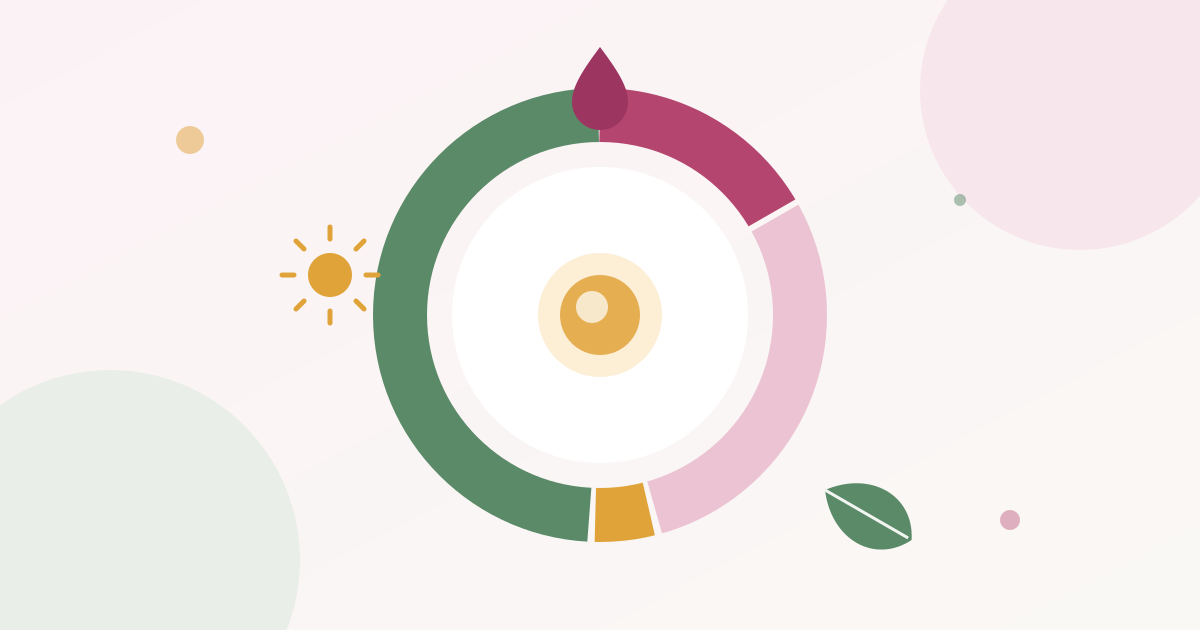
Seed cycling divides your menstrual cycle into two halves, based on the two main phases:
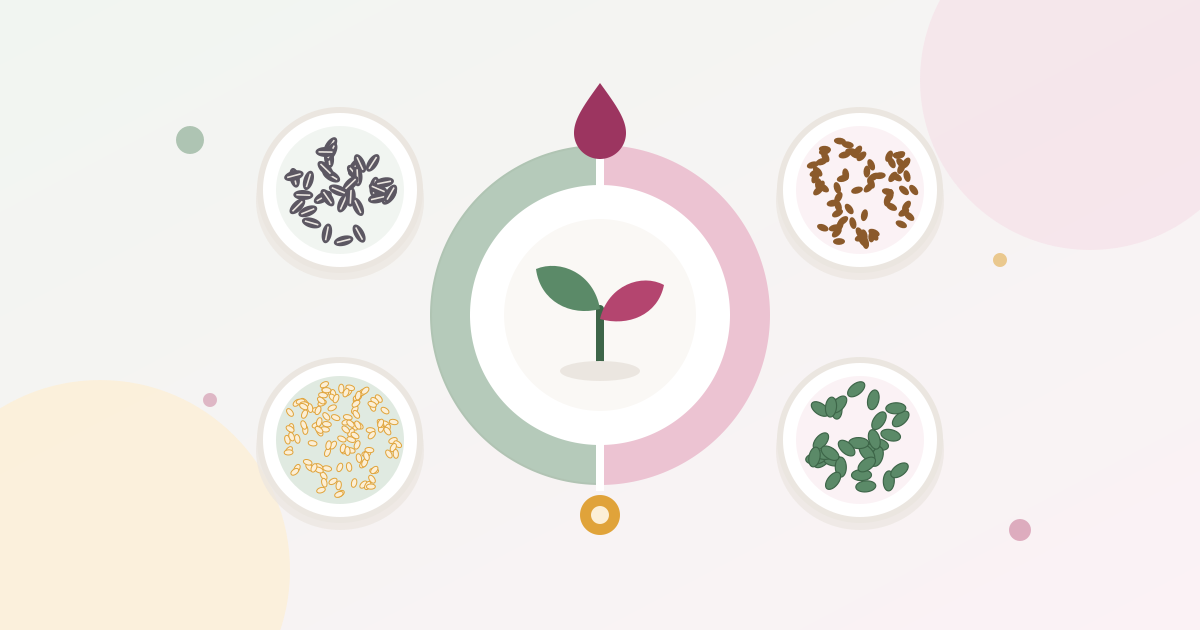
- Follicular phase (from day 1 of your period until ovulation, roughly days 1–14): 1 tablespoon each of ground flaxseed (alsi) and pumpkin seeds (kaddu ke beej) every day.
- Luteal phase (from ovulation until your next period, roughly days 15–28): 1 tablespoon each of sesame seeds (til) and sunflower seeds (surajmukhi ke beej) every day.
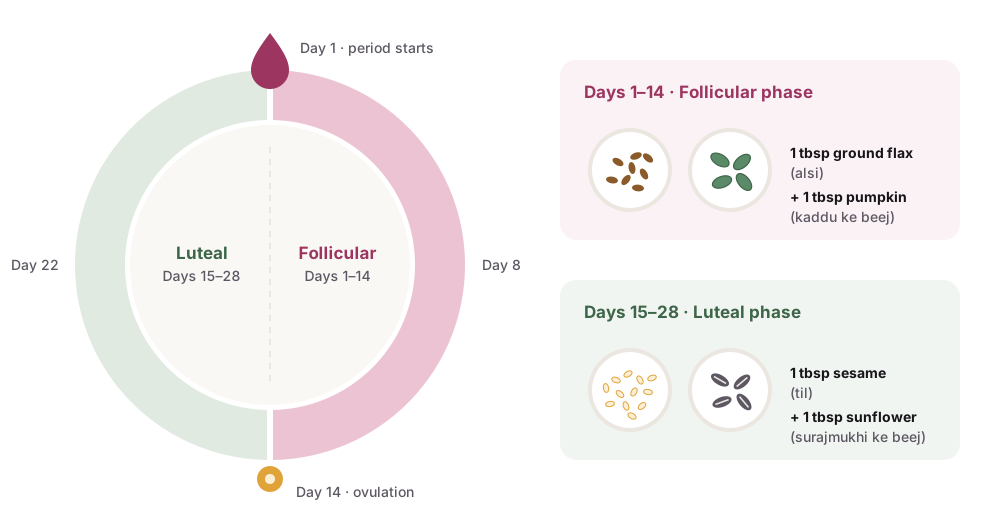
If your cycle is not 28 days, followers usually switch seeds at ovulation rather than on a fixed day. If you want a refresher on what happens in each phase, read our guide to the phases of the menstrual cycle.
The claimed mechanism
Supporters of seed cycling say that the nutrients in each seed nudge hormones in the right direction:
| Phase | Seeds | Claimed effect | Key nutrients |
|---|---|---|---|
| Follicular | Flax + pumpkin | Flax lignans “balance” estrogen; pumpkin zinc “prepares” for progesterone | Lignans, omega-3 (ALA), fibre, zinc, magnesium |
| Luteal | Sesame + sunflower | Sesame lignans “block excess” estrogen; sunflower vitamin E and selenium “support” progesterone | Lignans, calcium, vitamin E, selenium |
There is a grain of real science behind some of these ideas. Lignans in flax and sesame are plant compounds (phytoestrogens) that can weakly interact with estrogen pathways in the body. Zinc and selenium are needed for normal hormone production and ovulation. Vitamin E and omega-3 fats have been studied for period pain and PMS.
However, the jump from “this nutrient is involved in hormone health” to “eating this seed in this exact phase balances your hormones” is a big one.
What does the evidence say?
This is the honest part.
There is very little direct research
As of now, there are no robust clinical trials showing that seed cycling, as a practice, changes hormone levels, regulates cycles or improves PMS. Most of the support comes from personal stories, wellness blogs and social media.
Some research on the individual seeds exists
A small number of studies, many of them older or small in size, have looked at flaxseed and suggested modest effects on cycle hormones or ovulation in some women. These studies tested flaxseed on its own, often for the whole cycle — not the switching pattern used in seed cycling. The results cannot be taken as proof that seed cycling works.
The timing idea is not well supported
The body does not make hormones from seeds day by day. Nutrients like zinc, selenium and vitamin E are stored and used over time, so there is no clear reason why eating them only in one half of the cycle would matter.
Your hormones already follow their own rhythm
In a healthy cycle, estrogen and progesterone rise and fall because of signals from the brain and ovaries, not because of what you ate that week. If your hormones are genuinely out of balance — as in PCOS, thyroid disorders or very low body weight — the cause needs proper diagnosis and treatment.
Key tip: Think of seed cycling as a simple way to eat more nutritious seeds, not as a hormone treatment. If it helps you build a healthy habit, that is a real benefit — but don’t delay seeing a doctor for symptoms that need attention.
Why the seeds are good for you anyway
Even without proof that the cycling pattern works, these four seeds are genuinely nutritious and fit well into an Indian diet.
| Seed (1 tbsp, approx.) | Calories | Highlights |
|---|---|---|
| Flaxseed (alsi), ground, 7 g | 37 kcal | Omega-3 ALA (about 1.6 g), 2 g fibre, lignans |
| Pumpkin seeds (kaddu ke beej), 9 g | 50 kcal | Magnesium, zinc, iron, about 2.5 g protein |
| Sesame seeds (til), 9 g | 52 kcal | Calcium (more in unhulled seeds), iron, lignans |
| Sunflower seeds (surajmukhi ke beej), 9 g | 52 kcal | Vitamin E (about 3 mg), selenium, healthy fats |
Values are approx., based on standard food composition data.
Together, two tablespoons of seeds a day add roughly 90–105 kcal, along with fibre, healthy fats, minerals and a little protein. For vegetarians, pumpkin and sesame seeds are useful extra sources of iron and zinc, nutrients that many Indian women fall short on. You can also read about another traditional seed in our guide to kalonji seeds.
How to try seed cycling safely
If you would like to try it, here is a sensible approach:
- Track your cycle first. Note the first day of your period and, if possible, signs of ovulation such as egg-white discharge. A period tracker like Nitya Health makes it easier to see which phase you are in and when to switch seeds.
- Grind flaxseed fresh. Whole flaxseeds often pass through undigested. Grind a small batch and store it in an airtight jar in the fridge for up to a week or two.
- Lightly dry-roast the other seeds in a pan for better taste. Avoid salted, fried or flavoured seed snacks.
- Start slowly. Flaxseed is high in fibre. Begin with a teaspoon and build up, and drink plenty of water to avoid bloating or constipation.
- Keep a symptom diary. Note your energy, mood, cramps, bloating and skin across a few cycles, so you can judge honestly whether anything changes.
- Don’t stop other treatment. Seed cycling should never replace medicines or advice from your doctor.
Easy seed cycling recipes
1. Seed laddoo (makes about 10)
Make two batches — one for each phase — or a single mixed batch if you don’t want to cycle strictly.
Follicular batch: ½ cup ground flaxseed and ½ cup pumpkin seeds. Luteal batch: ½ cup sesame seeds and ½ cup sunflower seeds.
For each batch, you will also need:
- 10–12 soft dates (khajoor), seeds removed
- 2 tablespoons desiccated coconut
- ½ teaspoon cardamom (elaichi) powder
- 1 teaspoon ghee
Dry-roast the seeds (not the ground flax) on low heat until fragrant. Cool, then coarsely grind. Blend the dates into a sticky paste, mix in the seeds, coconut, cardamom and ghee, and shape into small laddoos. One laddoo a day roughly matches the seed cycling amount. Store in an airtight container for up to a week.
2. Seed mix for raita
Stir 1 tablespoon of each phase’s seeds into a bowl of cucumber or lauki raita, with roasted jeera, black salt and coriander. The seeds add crunch and make the raita more filling.
3. Seed smoothie
Blend 1 tablespoon of each phase’s seeds with a small banana, 150 g plain curd or 200 ml milk, a handful of spinach and a pinch of cinnamon. Soaking sesame and sunflower seeds for an hour first makes the smoothie smoother.
Other easy ideas
- Sprinkle seeds over poha, upma, daliya or salads.
- Add til to chutney or roti dough.
- Mix ground flax into atta (about 1 tablespoon per cup) for rotis or parathas.
Who should be careful
Seeds are safe for most people in food amounts, but take care if any of these apply to you:
- Seed allergies: Sesame is a common and potentially serious food allergen. People can also be allergic to sunflower or other seeds. Avoid any seed you have reacted to before, and seek urgent help for swelling, hives or breathing difficulty.
- Irregular, very heavy or very painful periods: These can be signs of conditions like PCOS, thyroid disease, fibroids or endometriosis. See a gynaecologist rather than relying on seed cycling. Our guide to irregular period causes explains more.
- Pregnancy and breastfeeding: Seeds in normal food amounts are generally fine, but there is limited research on regular flaxseed in large amounts during pregnancy. Ask your doctor before making it a daily habit.
- Hormone-sensitive conditions: If you have, or have had, a hormone-sensitive cancer or are on hormone treatment, talk to your doctor before eating large amounts of lignan-rich seeds.
- Blood-thinning medicines or upcoming surgery: Omega-3 fats and vitamin E may have mild blood-thinning effects in large amounts. Food portions are unlikely to matter, but tell your doctor if you take these medicines.
- Digestive problems: Flaxseed is a strong source of fibre. If you have bowel conditions or a history of bowel obstruction, check with your doctor first, and always drink enough water.
- Kidney disease: Seeds contain phosphorus and potassium. Follow your dietitian’s advice if you are on a restricted diet.
When to see a doctor
See a doctor if your cycles are consistently shorter than 21 days or longer than 35 days, if your periods stop for three months or more when you are not pregnant, or if you have heavy bleeding, severe pain, acne or excess hair growth that worries you. These deserve a proper check-up — seed cycling is, at best, a healthy food habit alongside good medical care.
Frequently asked questions
Does seed cycling actually work?
There is very little direct scientific evidence that seed cycling balances hormones or regulates periods. The seeds themselves are nutritious, so adding them to your diet can be healthy, but it is not a proven treatment for any hormonal condition.
How long should I try seed cycling?
People who promote seed cycling usually suggest trying it for about three cycles. If you have irregular periods, painful periods or other symptoms, it is better to see a doctor than to wait for seed cycling to work.
Can I do seed cycling if my periods are irregular?
Some people follow the moon phases or simply switch every 14 days when cycles are irregular. However, irregular periods can have causes such as PCOS or thyroid problems, so get them checked by a doctor first.
Should the seeds be raw or roasted?
Either is fine to eat. Flaxseed should be ground, because whole flaxseeds often pass through the body undigested. Lightly dry-roasting seeds improves flavour, but avoid salted or fried seed snacks.
- #seed cycling
- #hormones
- #flaxseed
- #menstrual cycle
- #seeds
Track it with Nitya Health
Log your cycle, symptoms and habits — and get answers from an AI health coach.