Bananas for Weight Loss and Weight Gain
Can one fruit help you lose weight and gain weight? How bananas fit both goals, with calories by size, raw vs ripe, best time to eat, myths and easy recipes.
By Nitya Health Editorial Team8 min read
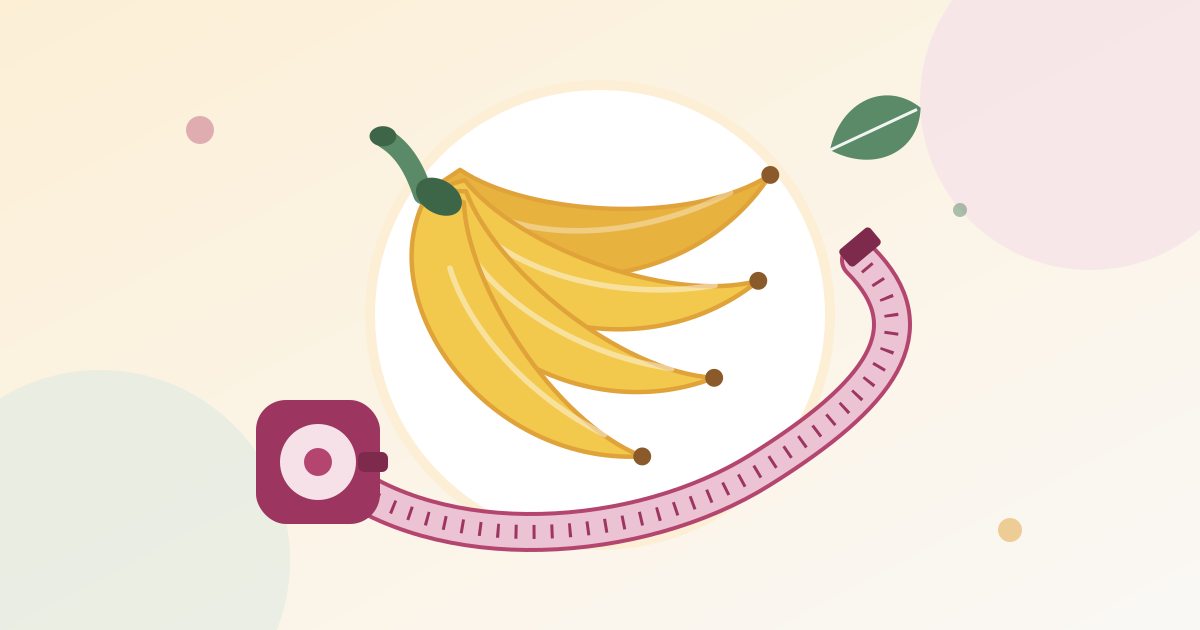
Bananas (kela) are one of the most loved fruits in India — cheap, available all year, and easy to carry in a bag. Yet they have a confusing reputation. Some people avoid them because they are “fattening”, while gym-goers drink banana shakes to bulk up. So which is it?
The honest answer is that a banana is neither a weight-loss food nor a weight-gain food on its own. What decides the effect is how much you eat, what you eat it with, and your total calories across the day. Below, we break down banana nutrition by size, explain how ripeness changes things, and show how to use bananas for either goal.
Banana nutrition by size
Bananas vary a lot in size — a small elaichi (yelakki) banana is much lighter than a large Robusta or Cavendish banana. These approximate values are for the edible part of a common yellow banana.
| Size | Edible weight (approx.) | Calories | Carbs | Fibre | Sugar | Potassium |
|---|---|---|---|---|---|---|
| Small (15–18 cm) | 100 g | 90 kcal | 23 g | 2.6 g | 12 g | 360 mg |
| Medium (18–20 cm) | 120 g | 105 kcal | 27 g | 3.1 g | 14 g | 420 mg |
| Large (20–23 cm) | 135 g | 120 kcal | 31 g | 3.5 g | 17 g | 490 mg |
Values are approx., based on standard food composition data. A small elaichi banana may weigh only 40–60 g edible and provide roughly 40–60 kcal.
Bananas are almost fat-free and contain about 1 g of protein. They also provide vitamin B6, some vitamin C, magnesium and plenty of potassium, which helps regulate blood pressure and muscle function.
Raw vs ripe banana: why ripeness matters
As a banana ripens from green to yellow to spotty brown, its carbohydrates change. A green, unripe banana is rich in resistant starch — a type of starch that is not fully digested in the small intestine. It behaves more like fibre: it is fermented by gut bacteria in the large intestine and tends to raise blood sugar more slowly.
As the fruit ripens, enzymes break this starch down into sugars (mainly sucrose, glucose and fructose). That is why ripe bananas taste sweeter and are softer.
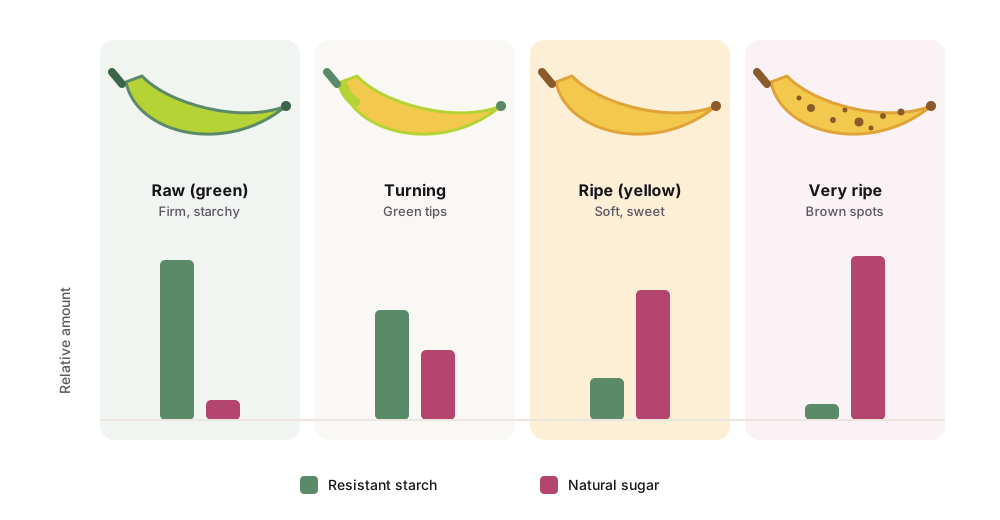
| Raw (green) banana | Ripe (yellow) banana | Very ripe (brown spots) | |
|---|---|---|---|
| Main carbohydrate | Resistant starch | Mix of starch and sugar | Mostly sugar |
| Taste and texture | Firm, starchy, not sweet | Soft, sweet | Very soft, very sweet |
| Effect on blood sugar | Slower rise | Moderate | Faster rise |
| Best used for | Sabzi, chips (baked), kofta | Eating whole, smoothies | Baking, shakes, sweetening |
Both raw and ripe bananas have similar calories per gram. The difference is mainly in how filling they are and how quickly they affect blood sugar.
How bananas can help with weight loss
Weight loss comes down to eating slightly fewer calories than your body uses, consistently, in a way you can sustain. Bananas can make that easier in a few ways.
They are filling for their calories
A medium banana has about 105 kcal and 3 g of fibre. Compare that with a packet of biscuits or namkeen with a similar number of calories, which is far less filling. Swapping processed snacks for a banana is a simple, practical change.
They curb sweet cravings
Ripe bananas are naturally sweet. Mashed into oats, curd or a smoothie, they can replace added sugar.
Resistant starch may help with fullness
Greener bananas and cooked-then-cooled raw banana contain resistant starch, which may help you feel fuller and supports gut bacteria. The effect on weight is likely modest, but it is a useful bonus.
How to eat bananas when losing weight
- Stick to one banana at a time, and choose small or medium ones.
- Pair it with protein or fat — a handful of roasted chana, a few almonds, a glass of buttermilk (chaas) or a bowl of curd. This keeps you full longer and steadies blood sugar.
- Count it as part of a meal or snack, not an extra on top of everything else.
- Avoid banana chips fried in oil and sweetened banana milkshakes, which are much higher in calories.
Key tip: Pairing a banana with protein — curd, paneer, peanuts or roasted chana — is the single easiest way to make it more filling, whether your goal is losing or gaining weight.
How bananas can help with weight gain
If you are underweight or struggle to eat enough, bananas are one of the easiest ways to add good-quality calories. They are cheap, easy to digest, and blend smoothly with calorie-dense ingredients.
Make calorie-dense combinations
On its own, a banana is not very high in calories. The trick is to combine it with energy-rich foods:
- Full-fat milk or curd for protein and calories
- Peanut butter, almonds, cashews or walnuts for healthy fats
- Oats for slow-releasing carbohydrates
- Dates (khajoor), raisins (kishmish) or figs (anjeer) for extra energy
- Ghee or a spoon of jaggery in moderation, in traditional dishes
Eat more often
Adding a banana shake between meals or a banana with peanuts after a workout raises your daily intake without making main meals feel heavier. For healthy weight gain, aim to add calories alongside enough protein so that you build muscle rather than only fat. Our guide to protein-rich vegetarian foods has plenty of ideas.
Best time to eat a banana
There is no single “correct” time, but some timings suit particular goals:
- Breakfast: with oats, curd or milk — a filling, quick start to the day.
- Before exercise (30–60 minutes): easily digested carbohydrates give you energy without feeling heavy.
- After exercise: with a source of protein, to help refuel and recover.
- Mid-morning or evening snack: a better swap for biscuits, samosas or packaged snacks.
- During periods: bananas are gentle on the stomach and provide potassium and vitamin B6, which some people find helpful when they feel low on energy or bloated.
Common banana myths
“Bananas are fattening.” A medium banana has about 105 kcal. Weight gain comes from total calories, not one fruit.
“Eating a banana at night causes a cold or cough.” This is a common belief, but there is no good evidence for it. If you notice a personal pattern, you can of course eat yours earlier in the day.
“People with diabetes can never eat bananas.” Many people with diabetes can include a small, less-ripe banana as part of a balanced meal, with their doctor’s advice. Portion and pairing matter more than complete avoidance.
“Banana and milk should never be combined.” Some traditional systems advise against this combination. Modern nutrition science has not shown it to be harmful for most people, and banana milkshakes are widely enjoyed. If it does not suit your digestion, simply have them separately.
“Banana on an empty stomach is dangerous.” For most healthy people, a banana in the morning is fine. Pairing it with something else, like curd or nuts, simply makes it more filling.
Three easy banana recipes
1. Banana oats smoothie (for weight loss)
Serves 1 · approx. 300 kcal
- 1 small ripe banana
- 200 ml toned milk or 150 g plain curd
- 2 tablespoons rolled oats
- 1 teaspoon chia seeds or ground flaxseed (alsi)
- A pinch of cinnamon (dalchini)
Blend everything until smooth. No added sugar is needed. It works as a light breakfast or a filling evening snack.
2. Peanut butter banana shake (for weight gain)
Serves 1 · approx. 600 kcal
- 1 large ripe banana
- 300 ml full-fat milk
- 2 tablespoons unsweetened peanut butter
- 2 tablespoons rolled oats
- 2 soft dates, seeds removed
Blend until creamy. Drink it between meals or after a workout. You can add a few soaked almonds for extra calories and protein.
3. Raw banana sabzi (kachche kele ki sabzi)
Serves 2
- 2 raw (green) bananas, peeled and cubed
- 1 teaspoon oil, ½ teaspoon cumin (jeera), a pinch of hing
- ½ teaspoon each turmeric (haldi), red chilli powder and coriander powder (dhania)
- Salt, lemon juice and fresh coriander
Boil the cubes for 5–6 minutes until just tender, then drain. Heat oil, add jeera and hing, toss in the banana with the spices and salt, and cook for 5 minutes until lightly golden. Finish with lemon and coriander. Serve with dal and roti for a fibre-rich, filling meal.
How to fit bananas into your day
Whether you want to lose or gain weight, consistency matters more than any single food. Keeping a simple log of meals, snacks and how you feel — for example in the Nitya Health app alongside your cycle — can help you notice patterns, such as stronger cravings in the days before your period.
A rough guide:
| Goal | How many | Pair with | Avoid |
|---|---|---|---|
| Weight loss | 1 small/medium a day | Curd, nuts, roasted chana, oats | Fried chips, sweetened shakes |
| Weight maintenance | 1–2 a day | Any balanced meal | Eating several at once instead of a meal |
| Weight gain | 1–3 a day | Full-fat milk, peanut butter, dates, nuts | Relying only on fruit without protein |
Who should be careful
Bananas are safe for most people, but some should take extra care:
- People with diabetes: Choose small or less-ripe bananas, eat them with protein or fat rather than alone, and monitor how your blood sugar responds. Your doctor or dietitian can advise on portions.
- People with chronic kidney disease: Bananas are high in potassium. When the kidneys do not work well, potassium can build up in the blood, which can affect the heart. Follow your nephrologist’s or dietitian’s advice on potassium limits.
- People on certain medicines: Some blood pressure medicines (such as ACE inhibitors and potassium-sparing diuretics) can raise potassium levels. Ask your doctor whether you need to limit high-potassium foods.
- People with a latex allergy: Some people allergic to latex also react to bananas. Seek medical help if you notice itching, swelling or breathing difficulty after eating them.
If you are trying to lose or gain weight and progress feels hard despite your efforts, or if you have unexplained weight changes, talk to a doctor. Conditions such as thyroid disorders or PCOS can affect weight and are worth checking.
Frequently asked questions
Do bananas make you fat?
No single food makes you gain fat — your total calorie intake over time does. A medium banana has only about 105 calories and some fibre, so it fits easily into a weight-loss diet when eaten in sensible portions.
How many bananas can I eat in a day?
For most healthy adults, one to two bananas a day is a reasonable amount as part of a varied diet. People with diabetes or kidney disease should ask their doctor or dietitian what portion suits them.
Is it bad to eat a banana at night?
There is no good evidence that bananas at night cause weight gain, colds or cough. If a banana keeps you from reaching for a heavier late-night snack, it can be a sensible choice.
Which is better for weight loss, raw or ripe banana?
Raw (green) banana contains more resistant starch and less sugar, so it is more filling and raises blood sugar more slowly. Ripe banana is still a good choice in a measured portion, especially paired with protein.
- #bananas
- #weight loss
- #weight gain
- #fruits
- #healthy snacks
Track it with Nitya Health
Log your cycle, symptoms and habits — and get answers from an AI health coach.