Signs of Ovulation: How to Tell When You're Ovulating
Learn the signs of ovulation, from egg-white cervical mucus to a rise in temperature, how to find your fertile window and what to do if cycles are irregular.
By Nitya Health Editorial Team7 min read
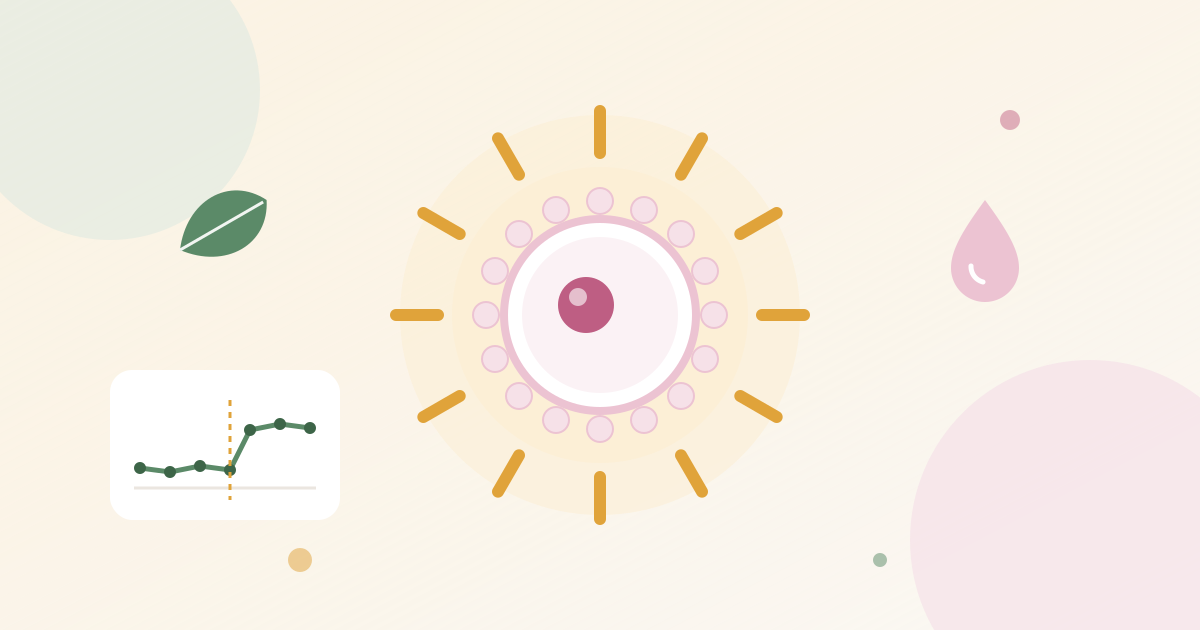
Ovulation is the moment in your cycle when an ovary releases a mature egg. It is the key event for fertility — whether you are trying to conceive or simply want to understand your body better. The good news is that your body often gives you clues when it is about to happen, if you know what to look for.
This guide explains when ovulation happens, the most common physical signs, how different tracking methods compare, and what to do if your cycles are irregular.
When does ovulation happen?
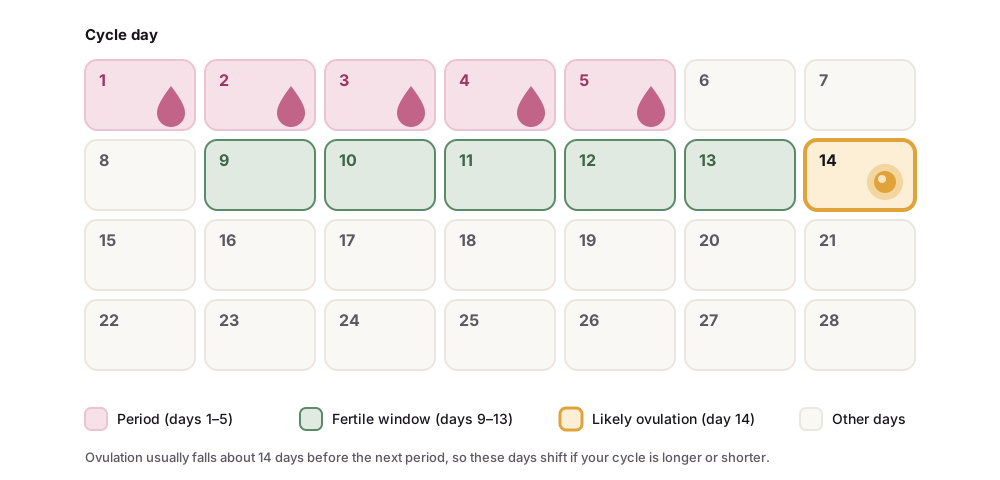
You may have heard that ovulation happens on day 14. That is only true for a textbook 28-day cycle. A more useful rule is that ovulation usually happens about 14 days before your next period (typically somewhere between 12 and 16 days before).
This is because the second half of the cycle, the luteal phase, tends to be fairly consistent in length. It is the first half — the follicular phase — that varies. So:
- In a 24-day cycle, ovulation is likely around day 10
- In a 28-day cycle, ovulation is likely around day 14
- In a 35-day cycle, ovulation is likely around day 21
If you would like a refresher on what happens in each part of the cycle, see our guide to the phases of the menstrual cycle.
Your fertile window
After it is released, the egg survives for only about 12–24 hours. Sperm, however, can survive in fertile cervical mucus for up to five days. This means your fertile window is about six days long — the five days before ovulation plus ovulation day. The two or three days just before ovulation are generally thought to be the most fertile.
Signs of ovulation to look out for
Not everyone notices every sign, and some people notice none. Watching for several together gives you a much clearer picture than relying on just one.
1. Changes in cervical mucus
This is one of the most useful signs. As estrogen rises before ovulation, your discharge changes from dry or sticky, to creamy, to clear, slippery and stretchy — like raw egg white. This fertile mucus helps sperm travel and survive. The last day of this slippery mucus is often very close to ovulation. Learn more in our guide to how vaginal discharge changes during your cycle.
2. A rise in basal body temperature (BBT)
Your basal body temperature is your temperature at complete rest. After ovulation, progesterone causes a small but sustained rise of about 0.2–0.5°C. To track it, take your temperature with a sensitive thermometer every morning before getting out of bed, at roughly the same time. BBT confirms ovulation after it has happened, so it is most useful for learning your pattern over a few cycles.
3. A positive LH test
A surge of luteinising hormone (LH) triggers ovulation, usually within about 24–36 hours. Ovulation predictor kits detect this surge in urine. A positive result suggests ovulation is likely in the next day or so — which makes these tests helpful for timing intercourse.
4. Ovulation pain (mittelschmerz)
Some people feel a twinge, ache or brief sharp pain on one side of the lower abdomen around ovulation. It usually lasts from a few minutes to a day or two. It can switch sides from cycle to cycle depending on which ovary releases the egg.
5. Changes in cervix position
Around ovulation, the cervix tends to sit higher, feel softer and be slightly more open. Checking this takes practice, so it is best used alongside other signs rather than on its own.
6. Other subtle signs
- Increased libido in the days leading up to ovulation
- Breast tenderness, often after ovulation as progesterone rises
- Light spotting for some people, linked to the mid-cycle hormone shift
- Mild bloating or a heightened sense of smell
The most practical combination for most people is watching cervical mucus every day and using LH strips once the mucus starts to become wetter. Add BBT if you want confirmation that ovulation actually happened.
Comparing ovulation tracking methods
| Method | What it tells you | Accuracy | Ease | Cost |
|---|---|---|---|---|
| Calendar or app predictions | An estimate based on past cycle lengths | Fair for regular cycles; poor for irregular ones | Very easy | Free or low |
| Cervical mucus | When your fertile window is opening | Good with practice | Moderate — needs daily checks | Free |
| Basal body temperature | That ovulation has already happened | Good for confirming, not predicting | Moderate — needs daily, consistent readings | Low (a BBT thermometer) |
| LH test strips | That ovulation is likely within the next day or two | Good, but can be harder to read with PCOS | Easy | Moderate, ongoing |
| Follicle tracking scans (folliculometry) | Follicle growth and rupture on ultrasound | High | Needs several clinic visits | Higher |
| Blood progesterone test | Whether ovulation occurred, about a week before the next period | High for confirming | Needs a lab visit, timed carefully | Moderate |
Follicle tracking scans and blood tests are usually arranged by a gynaecologist or fertility specialist, often when someone has been trying for a while or has irregular cycles.
Working out ovulation with irregular cycles
If your cycle length changes a lot from month to month, simple day-14 predictions will not work. Here is a practical approach:
- Track for at least six cycles. Note the first day of each period so you know your shortest and longest cycles.
- Use the shortest-and-longest rule for a rough fertile range:
- Earliest fertile day = shortest cycle length minus 18
- Latest fertile day = longest cycle length minus 11
- Watch your body’s signs — especially cervical mucus and LH tests — within that range.
For example, if your cycles range from 26 to 34 days, your possible fertile days would fall roughly between day 8 and day 23. That is a wide window, which is why body signs become even more important with irregular cycles. Logging your periods and symptoms in the Nitya Health app helps you see these patterns over time.
Tips for tracking ovulation accurately
A few small habits make your observations much more reliable:
- Check mucus at the same times each day, for example when you use the toilet in the morning and evening. Note both how it looks and how it feels — dry, sticky, creamy or slippery.
- Take your BBT before you get up, after at least three hours of unbroken sleep, using the same thermometer and the same method each day.
- Expect some noise in BBT readings. Illness, alcohol, travel, late nights and shift work can all nudge your temperature, so look for a sustained rise over three days rather than a single high reading.
- Test for LH at around the same time each day, usually from late morning to early evening, and avoid drinking large amounts of fluid for a couple of hours beforehand, as dilute urine can hide a surge.
- Start LH testing early enough. In a 28-day cycle, starting around day 10 or 11 is usually sensible; with longer or variable cycles, start a few days before your earliest likely ovulation.
- Be aware of PCOS. Some people with PCOS have persistently raised LH levels, which can make test strips show several positives or be hard to interpret.
Give yourself at least two or three cycles of tracking before drawing conclusions. Patterns become much clearer with time, and one confusing month is completely normal.
When ovulation does not happen
A cycle without ovulation is called anovulatory. An occasional anovulatory cycle is normal, but frequent ones can make it harder to conceive. Possible signs include very irregular or absent periods, unusually heavy or very light bleeding, and no BBT rise.
Common causes include:
- PCOS (polycystic ovary syndrome), also called PCOD or PMOS — one of the most common causes of irregular ovulation (what the names mean)
- Thyroid problems, both underactive and overactive
- High prolactin levels
- Stress, significant weight changes or very intense exercise
- Breastfeeding, which naturally suppresses ovulation for some time
- Approaching menopause (perimenopause)
- Recently stopping hormonal contraception, while cycles settle
Many of these are very treatable. If your cycles are often unpredictable, our guide to causes of irregular periods explains them in more detail.
When to see a doctor
Speak to a gynaecologist if:
- You have been trying to conceive for 12 months without success (or 6 months if you are 35 or older)
- Your cycles are regularly shorter than 21 days or longer than 35 days
- You have not had a period for three months or more and are not pregnant
- You never seem to get fertile mucus, a positive LH test or a temperature rise
- You have severe pain around ovulation or at any point in your cycle
- You have symptoms such as excess facial hair, persistent acne or unexplained weight changes, which may suggest a hormonal condition
A doctor can confirm whether you are ovulating with simple blood tests or scans, and there are effective treatments if you are not. Understanding your signs is a great first step — and bringing a few months of cycle notes to your appointment makes it even more useful.
Frequently asked questions
Does ovulation always happen on day 14?
No. Ovulation usually happens about 12 to 16 days before your next period, so it falls on day 14 only in a 28-day cycle. In a 35-day cycle, for example, it is more likely around day 21.
How many days am I fertile each cycle?
Your fertile window is about six days: the five days before ovulation and the day of ovulation itself. This is because sperm can survive for up to five days, while the egg lives for only about 12 to 24 hours.
Can I ovulate without noticing any signs?
Yes. Many people ovulate regularly without noticing obvious symptoms. Tracking cervical mucus, temperature or using LH test strips can reveal patterns that are otherwise easy to miss.
Can you have a period without ovulating?
Yes. In an anovulatory cycle you may still get bleeding, but no egg is released. This happens occasionally to most people, but if it happens often, it is worth discussing with a doctor.
- #ovulation
- #fertility
- #fertile window
- #cervical mucus
- #trying to conceive
Track it with Nitya Health
Log your cycle, symptoms and habits — and get answers from an AI health coach.