Dark Brown Period Blood: Everything You Need to Know
Why period blood turns dark brown, when it is completely normal, other possible causes and a colour chart to help you understand when to see a doctor.
By Nitya Health Editorial Team7 min read
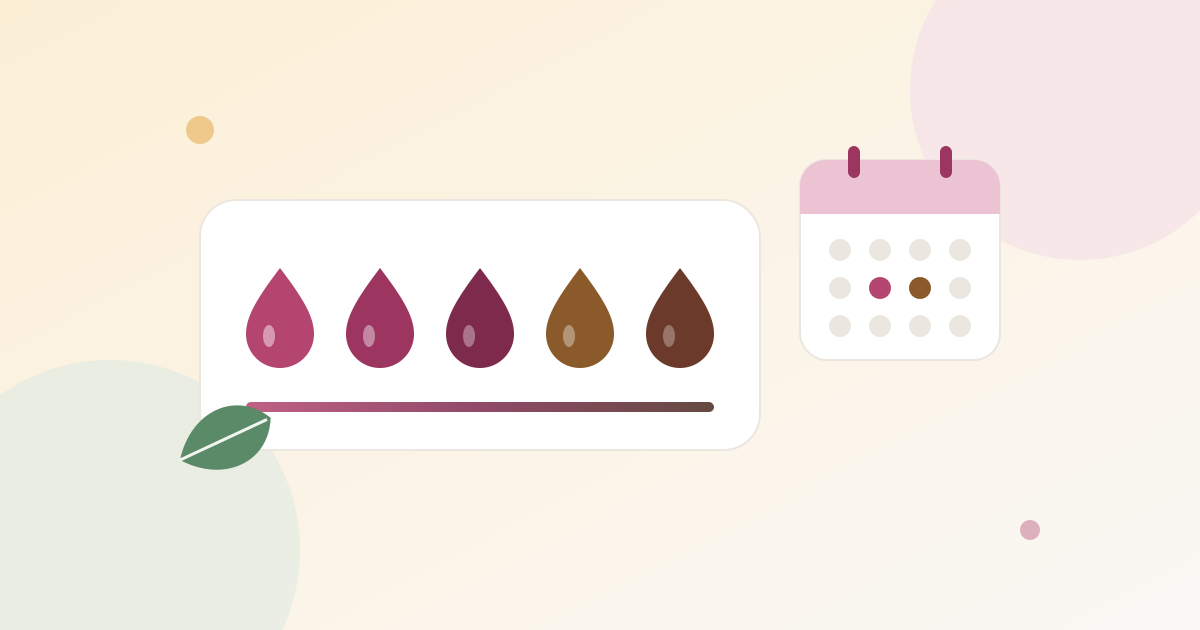
You go to the bathroom expecting the usual red and instead see something dark brown — almost like coffee grounds. It is a moment that worries a lot of people. In most cases, though, dark brown period blood is completely normal and simply a sign that the blood is a little older.
Period blood is not always the same shade. It can range from bright red to dark red, brown and even almost black, sometimes all within one period. Understanding why the colour changes can help you know what is normal for you, and when a change might be worth a conversation with your doctor.
Why does period blood turn brown?
Blood is red because of haemoglobin, the iron-containing protein in red blood cells. When blood is exposed to oxygen over time, the haemoglobin oxidises and gradually darkens — the same reason a cut on your skin turns from red to dark brown as it heals.
During your period, the lining of the uterus sheds and leaves through the cervix and vagina. When the flow is heavy and fast, blood leaves quickly and looks bright or deep red. When the flow is slow and light, blood stays in the uterus or vagina for longer before it comes out, and has more time to oxidise. That older blood appears dark red, brown or nearly black.
So, in simple terms: brown blood is usually old blood.
When brown blood is completely normal
At the start of your period
Some leftover blood from your last period, or the first slow trickle of this one, can come out brown before the brighter red flow begins. Many people notice a day of brown spotting before their period properly starts.
At the end of your period
As your flow slows down over the last day or two, the remaining blood leaves slowly and often looks brown. This is one of the most common times to see it.
In the morning
Blood can collect in the vagina while you are lying down overnight. When you get up, it may come out darker or as small brown clots.
Light periods
If your periods are naturally light, more of the blood may appear brown throughout.
Key point: Colour on its own is rarely a cause for concern. It is more useful to look at the whole picture — how long your period lasts, how heavy it is, whether it is on time, and whether you have other symptoms such as pain, itching or a bad smell.
Period blood colour chart
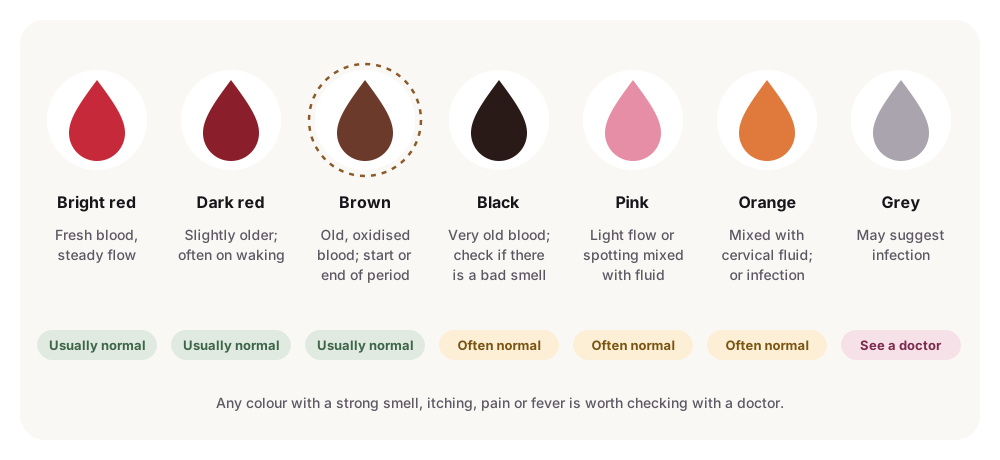
| Colour | What it may mean | Usually normal? |
|---|---|---|
| Bright red | Fresh blood with a steady flow, often in the first days of a period | Yes |
| Dark red | Blood that has been in the uterus a little longer; common on waking or later in the period | Yes |
| Brown | Older, oxidised blood — typically at the start or end of a period | Usually yes |
| Black | Very old blood that has taken longer to leave the body | Usually yes, but see a doctor if it comes with a bad smell, fever or itching |
| Pink | Blood mixed with cervical fluid; may be a light period, spotting around ovulation, or linked to low estrogen | Often; check if it keeps happening |
| Orange | Blood mixed with cervical fluid, or occasionally a sign of infection | Check with a doctor if there is a smell or itching |
| Grey or greyish-white | May suggest an infection such as bacterial vaginosis; in pregnancy, could be tissue | See a doctor |
Other causes of brown blood or spotting
Brown blood outside your usual period is still often harmless, but it can also be a clue to something else going on.
Implantation bleeding
Around 6–12 days after ovulation (often a few days before your period is due), some people notice light pink or brown spotting when a fertilised egg attaches to the uterine lining. It is usually much lighter and shorter than a period and may come with mild cramps. Read more about implantation cramps and how they differ from period pain.
Early pregnancy
Light brown spotting can occur in early pregnancy and is often harmless. However, bleeding in pregnancy should always be mentioned to your doctor, especially if it comes with cramping, one-sided pain, dizziness or shoulder-tip pain, which can be signs of miscarriage or ectopic pregnancy.
Hormonal contraception
Pills, the hormonal IUD, the implant and the injection often make periods lighter. Lighter, slower bleeding is more likely to look brown. Breakthrough spotting — small amounts of brown blood between periods — is also common, particularly in the first few months of starting a new method or if pills are missed.
Ovulation spotting
A small number of people notice light pink or brown spotting around the middle of their cycle, linked to the hormone shifts around ovulation.
Perimenopause
In the years leading up to menopause, hormone levels fluctuate. Periods may become irregular, lighter or heavier, and brown spotting between periods becomes more common. Any bleeding after menopause (12 months without a period) needs to be checked by a doctor.
PCOS (PCOD)
Polycystic ovary syndrome (PCOS, also called PCOD or PMOS) can cause infrequent or irregular periods. When a period finally comes after a long gap, or when bleeding is light and drawn out, it may look brown. If your cycles are often longer than 35 days, read our guide to irregular periods and their causes.
After a miscarriage or giving birth
After childbirth, the body clears blood and tissue from the uterus in a discharge called lochia. It starts bright red, then usually turns pink or brown, and finally yellowish-white over several weeks. Similarly, brown bleeding is common for a while after a miscarriage. Sometimes, small pieces of tissue can be retained in the uterus — your doctor will want to know about heavy bleeding, a bad smell, fever or worsening pain.
Infections and other causes
Sexually transmitted infections, pelvic inflammatory disease (PID), cervical polyps, fibroids or, rarely, a forgotten tampon can cause brown or bloody discharge, often with other symptoms such as a strong smell, itching, pain or fever.
What about clots and texture?
Colour is only part of the picture. Many people notice that brown or dark red blood comes with a thicker texture or small clots, especially in the morning or on heavier days. Small clots — roughly the size of a small coin or smaller — are common and usually happen when blood collects before it leaves the body.
It is worth mentioning to a doctor if you regularly pass clots larger than about 2.5 cm (roughly the size of a ₹10 coin), if clots come with very heavy bleeding, or if you feel unusually tired, short of breath or light-headed. Heavy periods can lower your iron and haemoglobin over time, which is common in India and easy to miss. If your periods are heavy, our guide to iron-rich vegetarian Indian foods may help.
Does brown blood mean something is “stuck” inside?
This is a common worry, and in most cases the answer is no. Brown blood simply means the blood took a little longer to leave the body. The uterus naturally clears its lining each cycle, and older blood coming out slowly is part of that normal process — it is not a sign that you are “unclean” or that your body is holding on to something harmful.
Tracking your period colour and flow
Noting your flow, colour and spotting days for a few cycles helps you understand your own pattern. In the Nitya Health app you can log spotting, flow and symptoms day by day, which makes it easier to notice changes — and to answer clearly if a doctor asks “when did this start?”
Things worth noting:
- The first and last day of each period
- Days of spotting between periods, and their colour
- How many pads you use on your heaviest day
- Pain, clots, fatigue or other symptoms
When to see a doctor
Brown period blood at the start or end of your period is rarely a concern. Talk to a gynaecologist if you notice:
- Brown spotting between periods that keeps happening, or bleeding after sex
- Any bleeding or spotting after menopause
- Brown discharge with a strong or unpleasant smell, itching, burning or fever
- Pelvic or abdominal pain, especially if it is severe or on one side
- Bleeding or spotting during pregnancy
- Periods that suddenly become very different — much heavier, much lighter, much longer, or missing for three months or more
- Grey discharge or passing grey tissue
- Heavy bleeding, a bad smell or fever after childbirth, miscarriage or abortion
- Feeling dizzy, very tired or breathless, which could suggest low haemoglobin from heavy bleeding
Most causes of brown blood are normal or easily treatable. If something does not feel right to you, trust that instinct and get it checked — you know your body best.
Frequently asked questions
Is dark brown period blood normal?
Usually, yes. Brown blood is simply older blood that has had time to react with oxygen, so it is very common at the start and end of a period, when flow is slow.
Can brown spotting be a sign of pregnancy?
It can be. Light brown or pink spotting a few days before your period is due may be implantation bleeding. If you have had unprotected sex and your period is late or unusually light, a home pregnancy test is a sensible first step.
Why is my whole period brown instead of red?
A light, slow flow gives blood more time to darken, which can happen with hormonal contraception, stress, perimenopause or conditions like PCOS. If your periods have changed noticeably, it is worth talking to a doctor.
When should I worry about brown discharge?
See a doctor if brown discharge comes with a bad smell, itching, pelvic pain or fever, happens often between periods, appears after sex or after menopause, or occurs during pregnancy.
- #period blood
- #brown discharge
- #spotting
- #menstrual cycle
- #period health
Track it with Nitya Health
Log your cycle, symptoms and habits — and get answers from an AI health coach.